
Sign up for the Today newsletter
Get everything you need to know to start your day, delivered right to your inbox every morning.
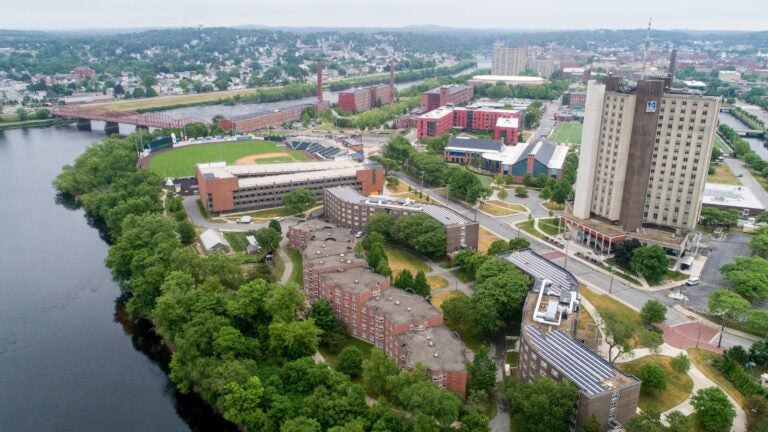
When Henry Marte’s landlord offered him a five-year lease on his Lowell loft, he didn’t think twice.
“In the past, I’ve never really found a place that I would commit to staying for so long, and without hesitation, I was like, ‘Where do I sign?’” Marte said. “That’s how much I love living here.”
Even though New York City will always be his hometown, Marte — now a resident of 13 years — said Lowell is where he feels settled.
Lowell — located in Middlesex County at the junction of the Concord and Merrimack rivers — was recently named the best place to live in Massachusetts, and the No. 3 place to live in the entire Northeast, according to a ranking by Livability. Residents and community leaders say the recognition reflects the city’s strong sense of community, growing arts scene, and expanding opportunities.

Marte works in photography and video production and teaches at Middlesex Community College. He said the city’s creative energy is one of its defining features.
“It’s not surprising that it’s ranked so highly,” Marte said. “There’s a lot to like.”
Murals line buildings across the city, and local businesses, including City Hall, regularly showcase work from Lowell artists, Marte said.
Marte also pointed to the city’s food scene, especially its Cambodian cuisine. Lowell is home to one of the largest Cambodian populations in the United States.
Each year, Lowell offers a wide range of events that bring the community together — from vibrant festivals to a local music scene.
Marte pointed to the Lowell Folk Festival — one of the largest free folk festivals in the country — as one of the city’s signature events. Held each July, downtown streets fill with music, food, and crowds, he said.

“It’s just like one big party,” Marte added.
Other notable events include the Southeast Asian Water Festival and the Lowell Summer Music Series.
For LZ Nunn, the welcoming atmosphere stood out immediately. After moving from Seattle more than 20 years ago for graduate school, Nunn said she quickly noticed how friendly the city felt.
Nunn, now executive director of Lowell Plan, said the city’s walkability and “hidden jewels” — such as the Lowell National Park, canal boat tours, and white-water rafting — add to its appeal.
Nunn also emphasized the scale of Lowell’s arts community, including Merrimack Repertory Theatre, Lowell Memorial Auditorium, and the Whistler House Museum of Art. Western Avenue Studios alone is home to more than 300 working artists, she said.
Luciano Paskevicius, a family advocate and community outreach worker at the Lowell Alliance, has lived in the city for about 16 years after moving from Argentina.

“I love very much because it’s a city that gave me the opportunity to sort of develop myself as the person that I am today,” he said.
That sense of opportunity is reinforced by collaboration across the city, Nunn said. She pointed to the recent creation of the Hive Public Market.
The project, led by Lowell Plan and the Lowell Development and Financial Cooperation, brought together local organizations and business owners after the historic Mill No. 5 shopping complex was set to close. What began as a vacant building turned into a community-driven effort to preserve local businesses and maintain the space’s spirit, Nunn said.
“There’s just a culture of support and partnership within the whole community,” she added. “People really band together to help make big projects happen.”
The plan for The Jack Kerouac Center is another recent development in Lowell. After being bought by country singer Zach Bryan, the historic Saint Jean Baptiste Church will be transformed into an interdisciplinary engagement center that will honor Kerouac — the writer was born in Lowell in 1922 — while at the same time broadly focusing on literature, film, and popular culture.
At the same time, the city faces challenges. Housing costs remain relatively high, with Zillow estimating the average home value to be $471,792 and the median sale price to be $422,333. The cost of living is about 19% higher than the national average, according to Payscale, though still significantly lower than Boston.
Addressing housing needs has become a priority, Nunn said.
“How can we create new both affordable rental units and or market rate rental units, as well as some really beautiful, affordable living?” she said. “That priority of housing is really starting to show through.”
One example is the Hamilton Canal District, a re-development project aiming to transform 15 acres of underutilized waterfront land into a mixed-use neighborhood connecting downtown to the commuter rail.
Additionally, residents emphasized education as a key aspect of Lowell.
Bopha Malone, vice president and regional business advisor at Enterprise Bank, has worked in Lowell for two decades. She is also executive director of Girls Inc. of Greater Lowell, an after-school program supporting girls ages 5 to 18.
Malone said Lowell’s strength lies in its interconnected institutions.
Businesses, nonprofits, and schools regularly work together to support residents, she said. At Girls Inc., that collaboration helps ensure students can navigate challenges and access opportunities.
“The people here are really resilient, and there’s a lot of opportunities and resources here,” Malone said.
Lowell offers a range of academic opportunities, including public schools, Middlesex Community College, and the University of Massachusetts Lowell — all located within close proximity. Students can even take college-level courses while still in high school, Nunn explained.
The city is also investing in future growth through projects like the Lowell Innovation Network Corridor, an $800 million mixed-use development that hopes to bring housing, research space, and retail to the area near UMass Lowell.
James Linnehan, president and CEO of Greater Lowell Community Foundation, said the city’s education system plays a central role.
“Lowell is about learning,” said Linnehan, who has lived in the area for 71 years. “One of the things that I think is cool about Lowell is you can go from kindergarten [to] PhD in the public education system.”
For many, that commitment to growth is what sets Lowell apart from other Massachusetts cities and towns.
“Lowell is a city that’s constantly evolving,” Malone said. “But what really makes it truly special is the people in the community that continue to invest in the next generation.”
Get everything you need to know to start your day, delivered right to your inbox every morning.





Be civil. Be kind.
Read our full community guidelines.To comment, please create a screen name in your profile
To comment, please verify your email address