

Sign up for the Today newsletter
Get everything you need to know to start your day, delivered right to your inbox every morning.
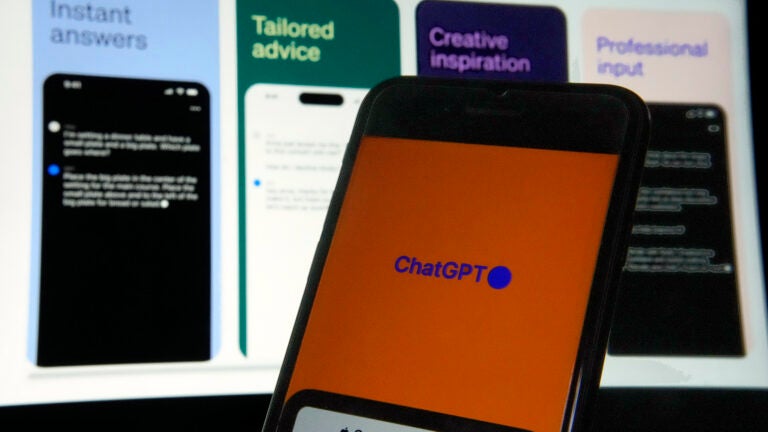
When Worcester software engineer Sam L. clicks “Submit” on a job application, he rarely expects to hear back.
“I’ve applied to about 26 positions so far. I’ve heard nothing about 16 of them,” he told Boston.com. “It is infuriating.”
Sam, 62, was laid off in July and has spent the last three months fine-tuning his resume, tailoring cover letters, and even running his resume through an AI keyword scanner.
“I went from 41% goodness of match to 44% goodness of match. At that point, I said, to heck with this. I’m not going to play this game.”
For many job seekers like Sam — and other Boston.com readers who shared similar frustrations — the process feels like shouting into the void. And for many, AI in hiring has become a convenient target for that frustration.
But experts say while AI tools and application tracking systems are increasingly used to filer candidates, it’s not always the reason resumes disappear.
The sheer volume of applicants has forced many companies, particularly larger ones, to turn to AI-driven systems to help organize and rank submissions, recruiters told Boston.com.
“The recruiters that are using AI, they’re using it primarily as a filtering tool,” said Patrick Cahill, founder of #twiceasnice Recruiting, a Boston-based national recruiting firm.
But is it the main culprit behind job seekers’ struggles? No, he argues.
“Is AI being used by a number of organizations? Yes, absolutely. Are applicant tracking systems trying to push AI tools more and more to the employers that are using them? They are. But it’s not something we see a lot of our clients using on a regular, systematic basis,” Cahill added.
Cahill’s firm works with midsize companies, many of whom are still manually reviewing resumes. For most candidates, the true audience is a human, he said.
Cahill worries that applicants are “optimizing for the wrong thing” — tweaking resumes to beat algorithms rather than writing clearly for human readers.
“[Employers] want a real person. They don’t want an AI version,” he said.
Patricia Hunt Sinacole, founder of First Beacon Group, a Boston-based HR consulting firm, agreed, saying she can tell when a resume or cover letter was generated by AI.
“It feels scripted and unnatural, like it loses that person’s voice,” she said. “Some hiring managers even feel like it’s sort of cheating.”
Still, some employers who discourage candidates using AI are simultaneously using the technology to sort through those applications.
“It’s this funny dynamic where employers are getting annoyed when candidates use AI, but they’re using it too,” Sinacole said.
If AI isn’t the sole barrier to job seekers landing jobs, the economy might be. Cahill says hiring urgency has cooled steadily since the post-pandemic boom.
“We’re much more in an employer’s market today than we were two and a half years ago,” he said. “Employers are slower, more cautious. They’re not feeling the same pressure to hire quickly.”
That trend aligns with data from the Bureau of Labor Statistics data showing job openings in Massachusetts and nationwide have fallen since peaking in 2022.
Both sides — employers and applicants — feel trapped by the same system.
Sinacole sympathizes with job seekers who feel ignored. “I hear it all the time, and I’m so embarrassed for my industry,” she said.
As Cahill put it: “What you’re experiencing is not you. It’s a macroeconomic situation”.
Despite it all, candidates like Sam L. keep applying.
“It sucks to get rejections, but it’s better than being ghosted,” Sam L. said.

Get everything you need to know to start your day, delivered right to your inbox every morning.





To comment, please create a screen name in your profile
To comment, please verify your email address
Conversation
This discussion has ended. Please join elsewhere on Boston.com