
Sign up for the Today newsletter
Get everything you need to know to start your day, delivered right to your inbox every morning.
Nearly one-quarter of Roxbury households are food insecure — more than anywhere else in Boston — according to the city’s Food Access Agenda, released in 2021.
Statewide, one in three Massachusetts residents report running out of food or not having enough money to get more every month, according to findings from a 2023 report by the Greater Boston Food Bank. Approximately 1.8 million adults in Massachusetts experienced food insecurity during 2022.
These statistics are part of the larger issue of food insecurity plaguing residents across the state, particularly households with children. In Eastern Massachusetts, 32% of households with children are food insecure and rates are even higher elsewhere in the state, according to the report.
“Food insecurity is a huge issue,” Laura Ancona, the associate director of marketing at Daily Table, a nonprofit grocery store, told Boston.com. “Somebody having to choose between getting their groceries and paying their rent, especially during the holidays, is really tragic.”
With locations in Dorchester, Roxbury, Mattapan, Cambridge, and Salem, the store is a certified 501(c)(3) non-profit aiming to make nutritious food affordable for people in areas that might not have access to healthy food.
The first Dorchester store opened in 2015, followed by Roxbury in 2018, Central Square in 2021, and Salem this year. The locations of the stores were intentional, Ancona said, as they are areas in Boston with high rates of food insecurity.
“A lot of the neighborhoods that we choose don’t either have nutritious food at all, or it’s out of reach in terms of price point,” Ancona said.
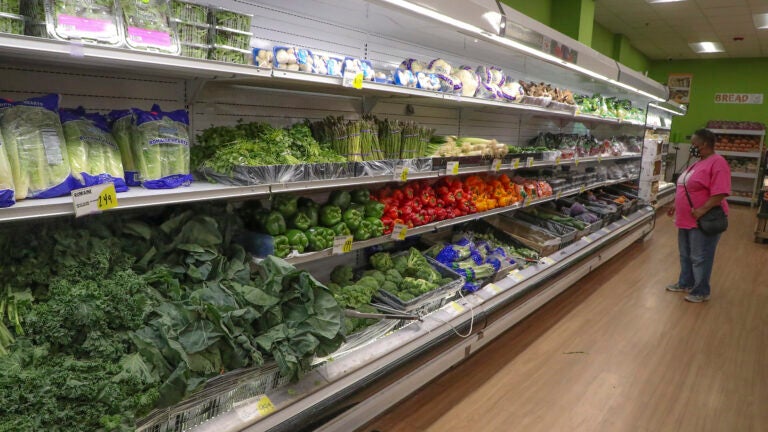
At Daily Table, customers can choose from a wide variety of fresh fruits and vegetables — which take up about a third of the sales floor, Ancona said — along with milk and dairy products, frozen food, pantry staples, meats, and prepared foods.
Being a nonprofit organization means the store can keep its costs for customers low and serve the community in a direct and impactful way. All of the food in the stores is SNAP eligible, and the stores offer a program called Double Up Food Bucks where customers paying with SNAP benefits can get an additional 50% off of their groceries.
“About two-thirds of our operating costs are covered by our store sales and then the rest is covered by individual giving or institutional giving,” Ancona said. “And that really helps us to keep our prices low for our customers.”
See Boston.com’s list of food access resources in Roxbury. Share any resources we missed in the form below or e-mail [email protected].

Get everything you need to know to start your day, delivered right to your inbox every morning.




Be civil. Be kind.
Read our full community guidelines.To comment, please create a screen name in your profile
To comment, please verify your email address