
Sign up for our Boston Marathon newsletter
Get Boston Marathon registration information, start times, live runner tracking, road closures, live updates from race day, special features, and more.
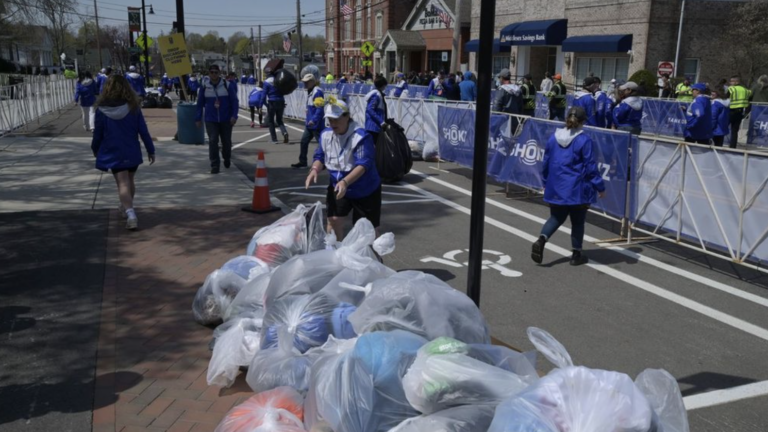
The Boston Marathon runs on adrenaline, preparation, and public spectacle. It also runs on paper cups, plastic bottles, energy gels, and throwaway layers. For a few hours on Marathon Monday, Boston operates on the race’s schedule. But even as spectators cheer and runners push toward the finish, crews are already preparing for the less glamorous part of the day: clearing the course and helping the city back to normal.
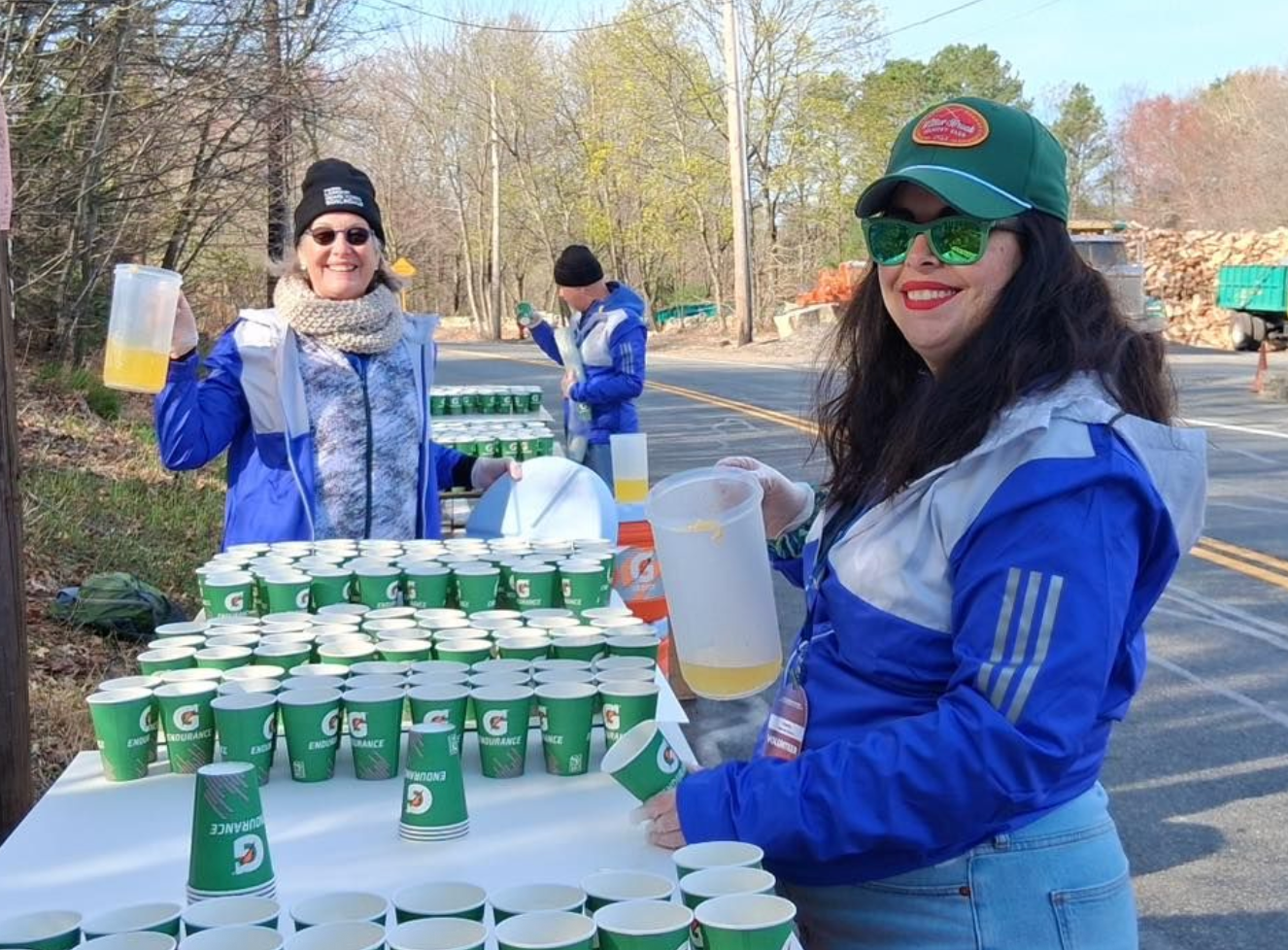
With 30,000 runners, 25 hydration stations, and nearly 10,000 volunteers along the route, cleanup is a massive operation. Boston.com spoke with Chris Coakley, public information officer for Boston Public Works, about what it takes to sweep the streets, collect the debris, and reopen the city.
Cleanup begins about six hours after the race starts and is typically finished by 8 to 9 p.m., with roads reopening in stages behind runners.
The work doesn’t wait for the final runner to reach Boylston Street.
Boston Public Works begins cleanup about six hours after the race starts, moving in behind runners and reopening roads in stages.
More than 100 department employees are involved before, during, and after the race. Some collect litter and sweep streets, while others block alleyways, manage traffic, and support public safety.
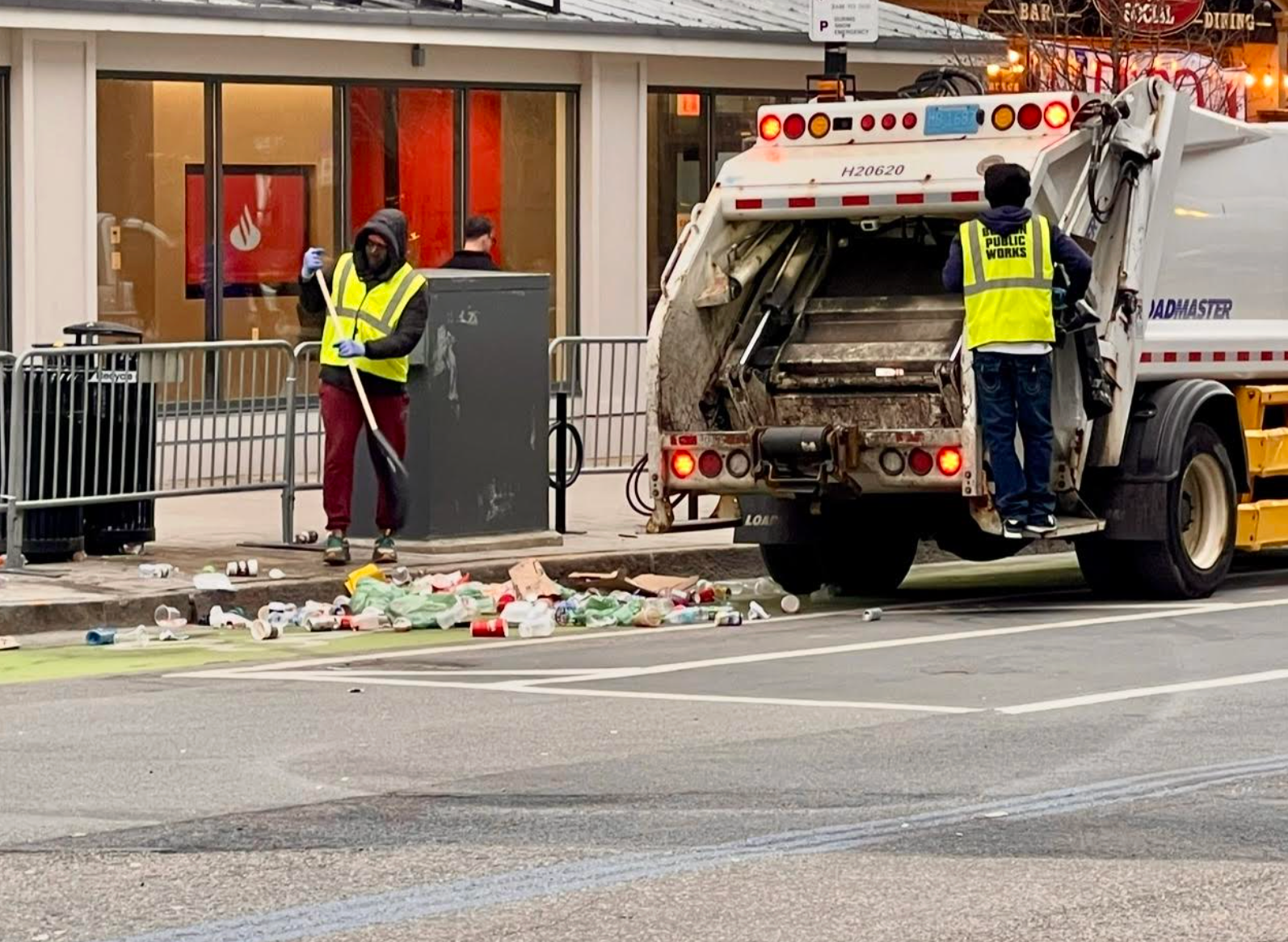
Crews move quickly, Coakley said, because “the Boston Police Department wants roadways along the course reopened as soon as possible.”
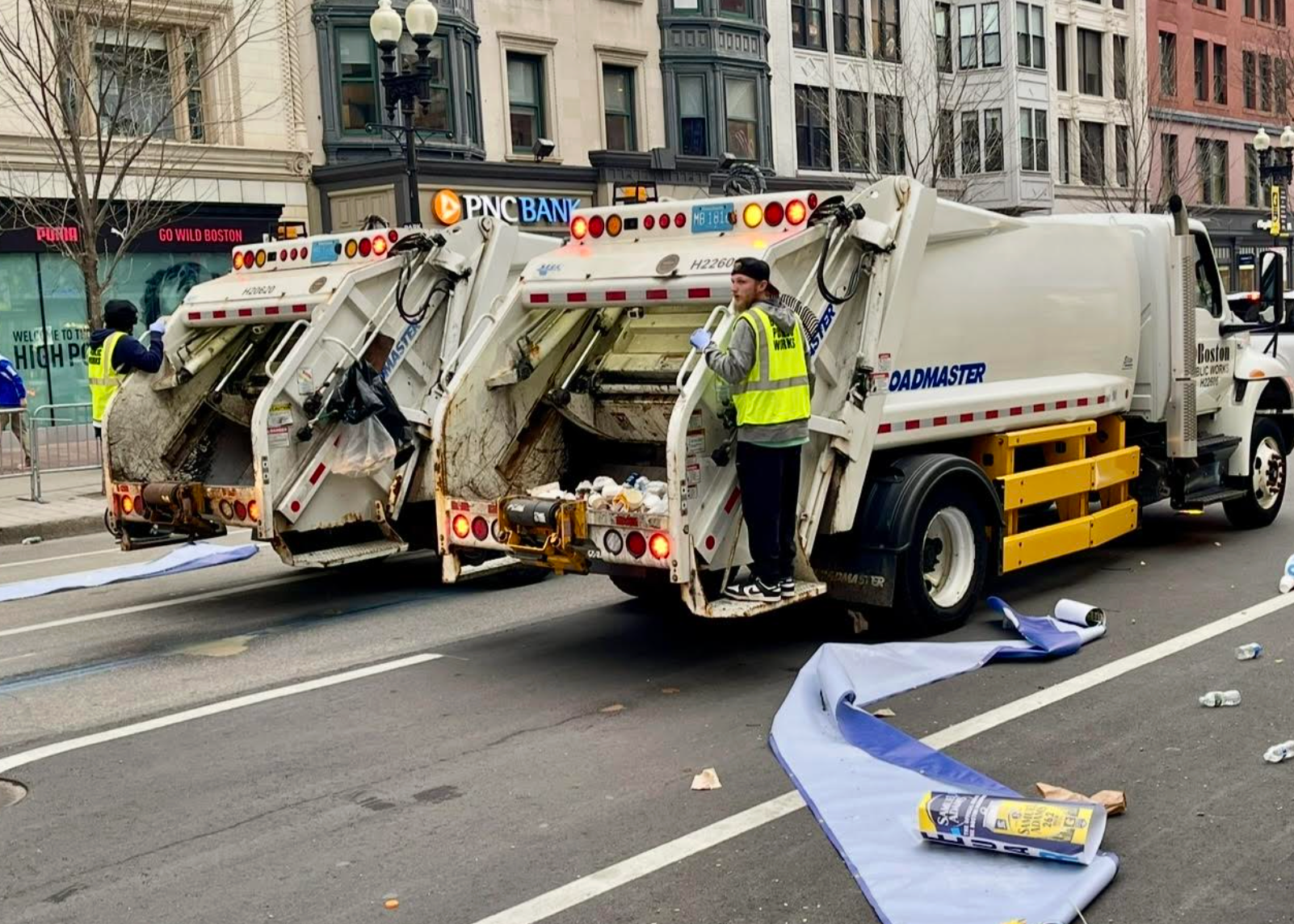
The bulk of the mess is exactly what you would expect.
“The most commonly discarded items include paper water cups, plastic bottles, energy gel packets, and other debris associated with runners’ nutrition and hydration,” Coakley said.
Race day waste also includes clothing and promotional materials, according to a spokesperson for the B.A.A.
With tens of thousands of runners, it adds up quickly — making Marathon Monday “one of the biggest days for clean-up operations for Public Works,” as Coakley put it.
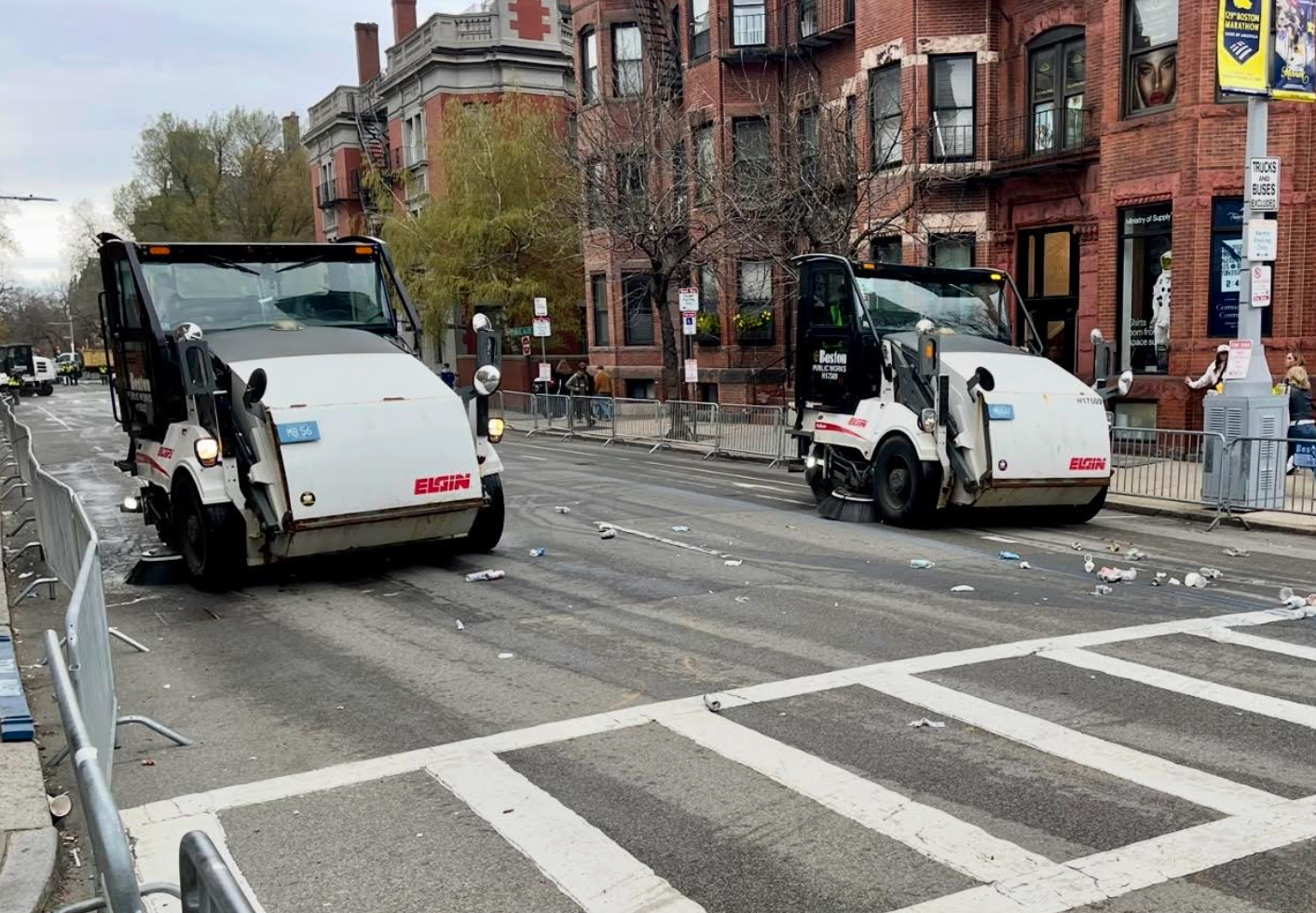
To get there, crews rely on street sweepers, leaf blowers, and manual tools like brooms and shovels. A typical Boston Marathon deployment includes 10 to 13 street sweepers and a dozen sanitation trucks.
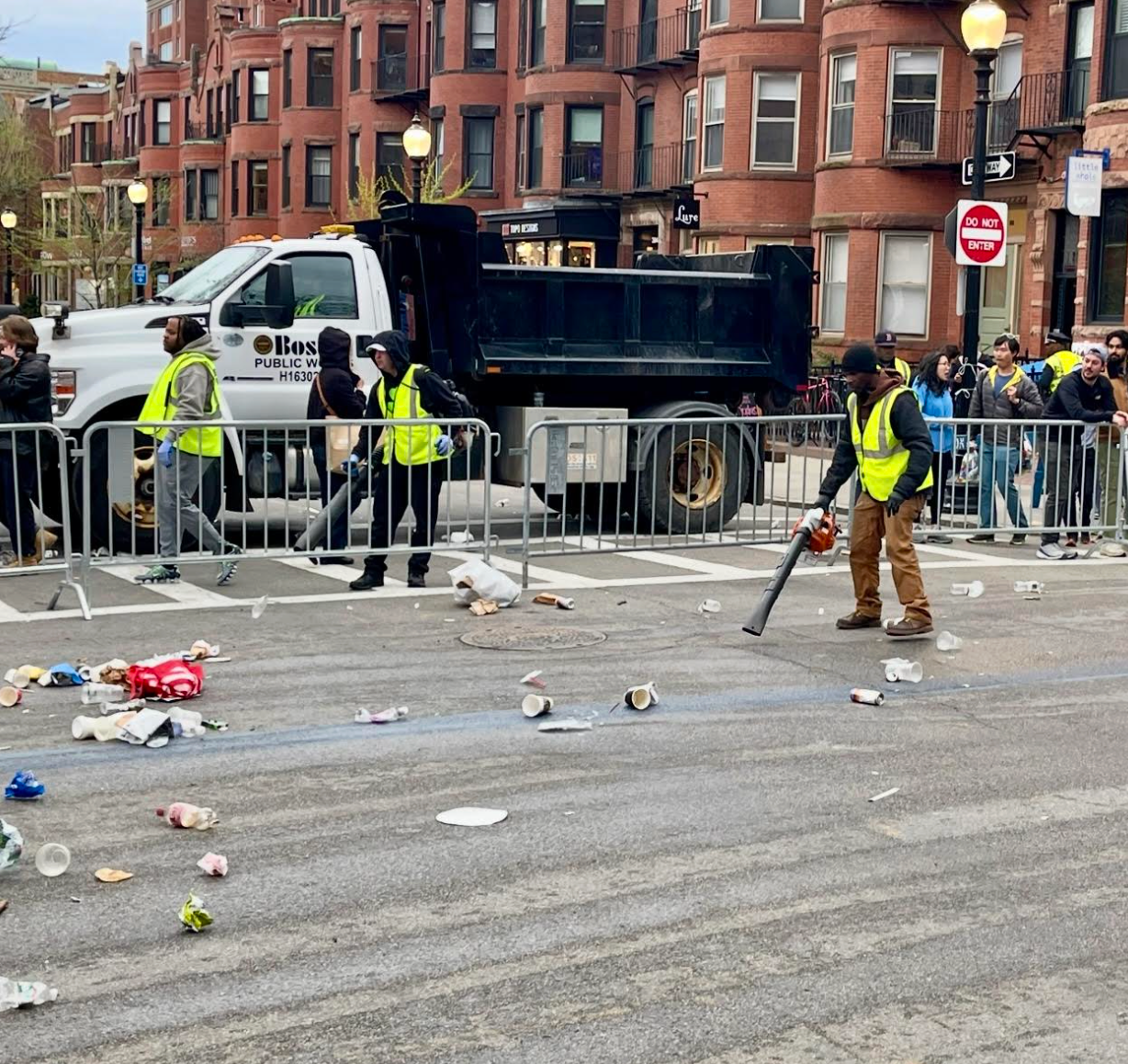
The final blocks of the race can get especially messy, particularly in bad weather, which leads runners to shed layers before the finish.
Coakley pointed to 2018, when severe rain and wind led runners to wear extra layers — ponchos, sweatshirts, and even trash bags — and then discard them before the finish.
As runners reached Hereford Street, many ditched those items for cleaner finish-line photos, leaving crews to clear unusually large piles of soggy gear while the race was still underway.
Much of what’s left behind doesn’t end up in the trash.
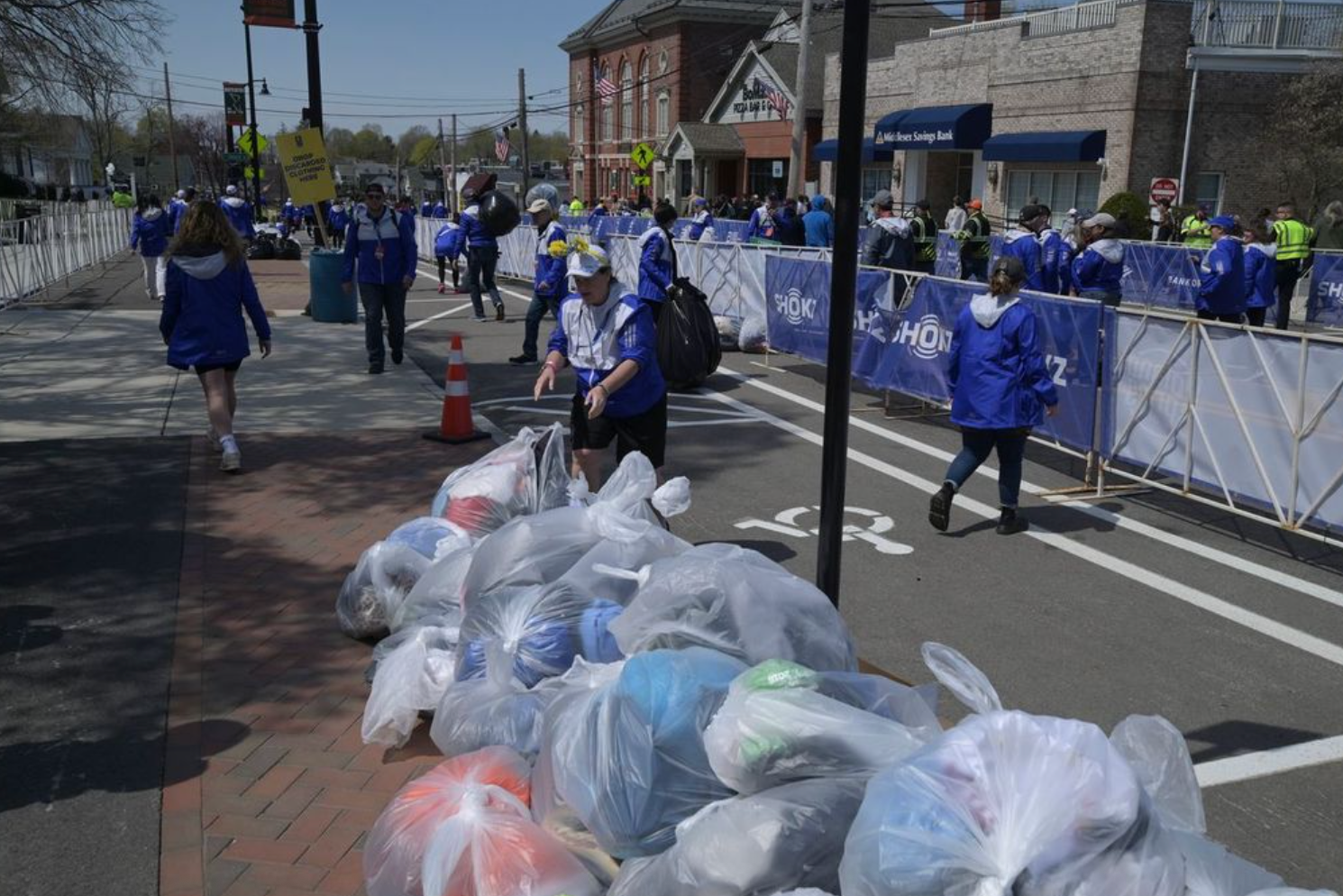
At the start line in Hopkinton, runners often shed sweatshirts, jackets, gloves, and ponchos after waiting hours in the cold. Those items — about 20 tons each year — are donated to Big Brothers Big Sisters of America, Mookherjee said.
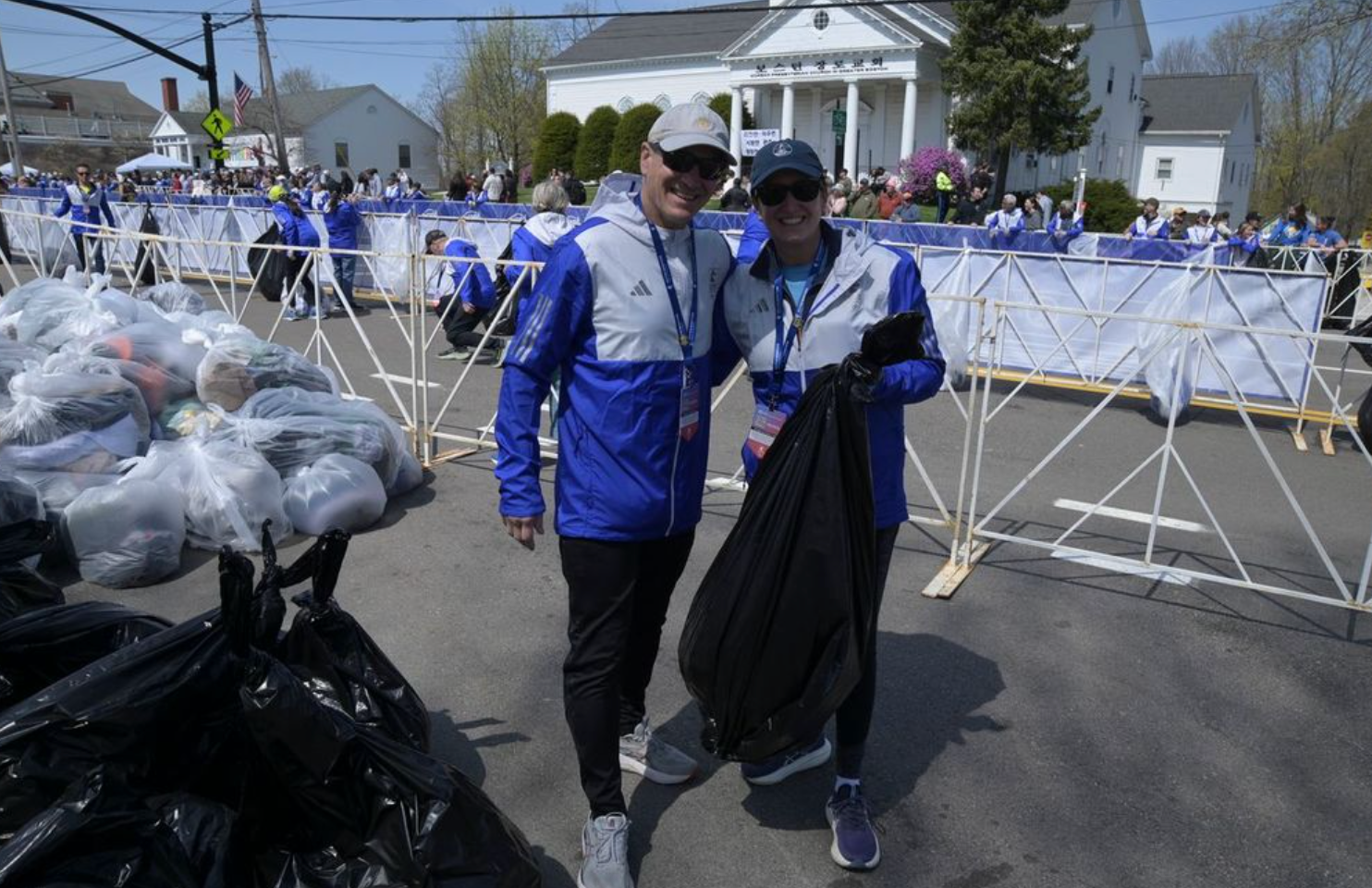
Other materials are redirected, too. Leftover perishable items are donated to the Greater Boston Food Bank, and runners can donate old sneakers at the marathon expo through Sneakers4Good. In 2025, more than 1,000 pairs were donated, up from 600 pairs the year before.
The B.A.A. is also trying to reduce what gets thrown away in the first place.
“All B.A.A. events have designated waste diversion areas with receptacles for recycling, compost and landfill throughout the venue,” a spokesperson said. Green Team volunteers help attendees sort materials and assist with cleanup.
This year, composting will be available at the finish line, Mookherjee said — part of a broader push to reduce food waste.
Get Boston Marathon registration information, start times, live runner tracking, road closures, live updates from race day, special features, and more.




Be civil. Be kind.
Read our full community guidelines.To comment, please create a screen name in your profile
To comment, please verify your email address