
Thrills meet truth in Vanessa Lillie’s New England-set Indigenous mystery
Indigenous author Vanessa Lillie looks at Narragansett history, the false narrative of the first Thanksgiving, and more powerful topics in her latest New England-set thriller.
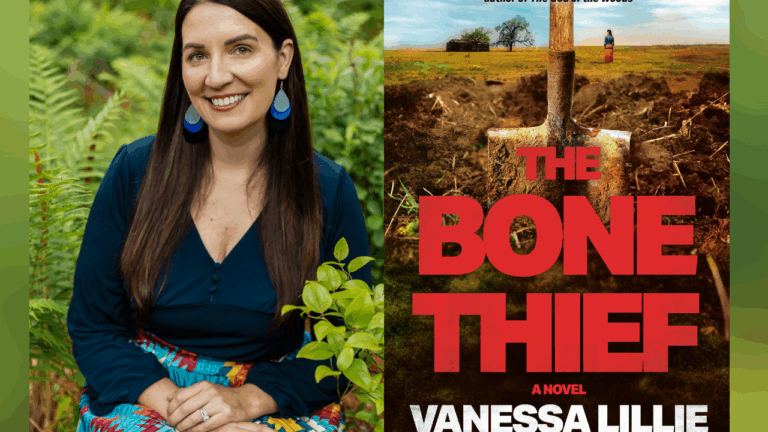
I’m a mystery and thriller diehard who loves a good twist — but that’s not the reason I blazed through this book.
Providence-based novelist and citizen of the Cherokee Nation Vanessa Lillie deftly weaves real-life present-day New England Indigenous history into a mystery with “The Bone Thief,” on shelves now.
This mystery-with-a-message is a follow-up to her 2023 USA Today bestseller “Blood Sisters,” and it does for New England and Narragansett history and what “Blood Sisters” did for Oklahoma and Cherokee history.
Come for the mystery, stay for the history.
What you don’t know about the history of the land we live on may shock you — including the fact that this year is the 350th anniversary of the Great Swamp Massacre. (Online, it’s often called “The Great Swamp Fight” — presumably a name given by the winners of the bloody battle, fought near present-day Kingston, R.I.)
Lillie — a native of Oklahoma of Cherokee descent, who identifies as Two Spirit and queer — introduced us in “Blood Sisters” to Syd Walker, a native of Oklahoma of Cherokee descent, who identifies as Two Spirit and queer. Syd lives in Rhode Island with her pregnant wife, working as an archaeologist at the Rhode Island Bureau of Indian Affairs. “Blood Sisters” revolved around a case in Oklahoma.
“Like Syd, I’m also white-presenting from northeastern Oklahoma,” Lillie tells me. “I gave her that identity because I felt comfortable writing it. I thought, ‘If I’m going to take a seat at the publishing table, I want to make sure it’s a seat that’s really mine.’”
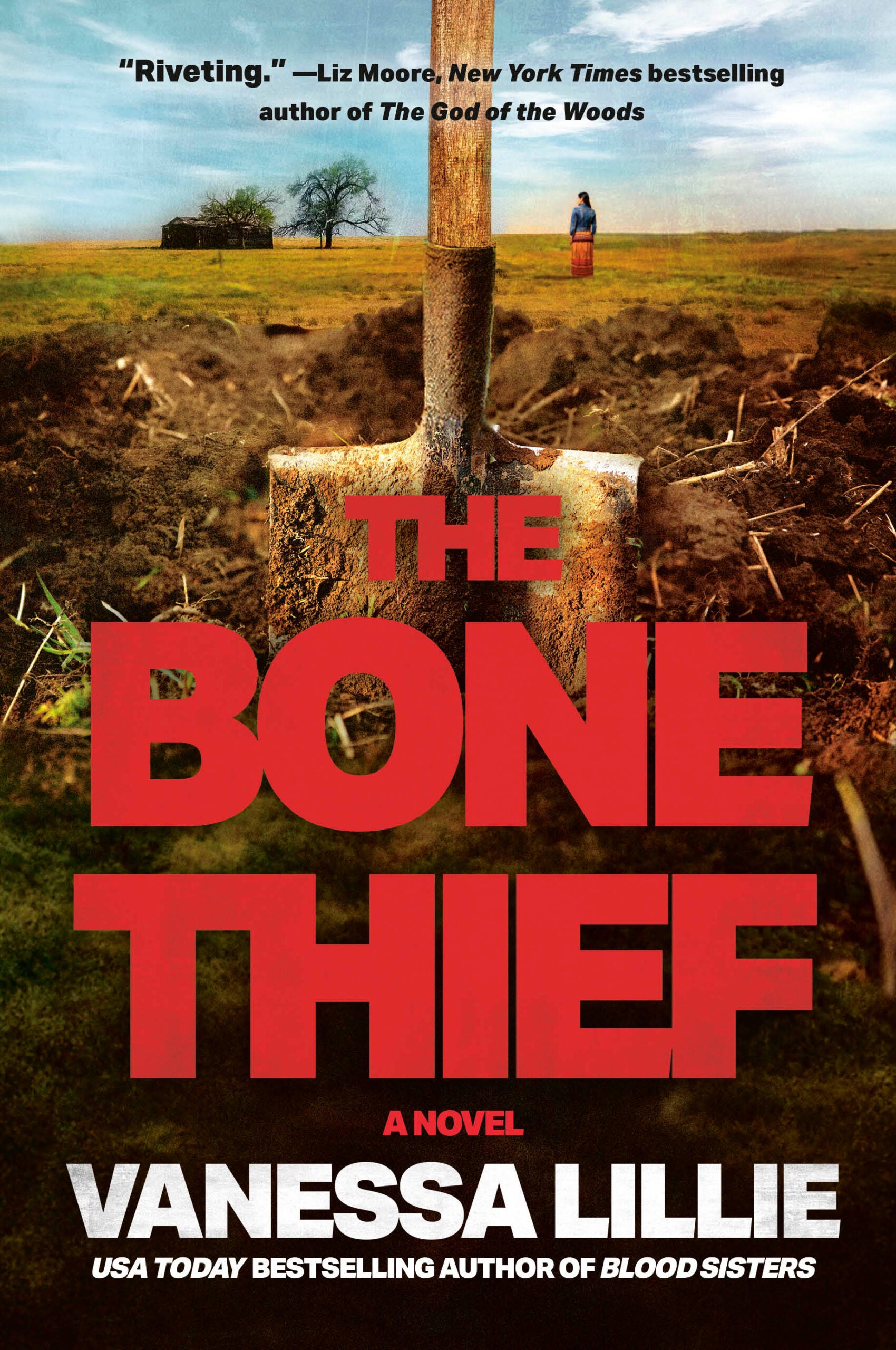
In researching Narragansett history, Lillie tells me “it was important that I share things that were public. I wasn’t trying to tell a Narragansett story. That’s their tribe, their story. I very intentionally wrote from Syd’s perspective, as a Cherokee from Oklahoma, observing.”
Her research — she cites help from the Tomaquag Museum in Exeter, R.I. — is extensive.
“The Bone Thief” picks up in Rhode Island three months after “Blood Sisters” ends — in fact, Syd’s wife is still pregnant. You don’t have to read it first, but know some storylines and plots from book one are discussed.
“The Bone Thief” focuses on early New England colonists, Narragansett land, history and culture.
Syd is dealing with two cases at once. First, the skeletal remains of a Narragansett person have been stolen from a burial ground dig site. Second, a Narragansett teen girl has disappeared, and law enforcement dismisses her case. She’d recently been caught shoplifting from a CVS. Her grandmother tells Syd: “Police say she’s hiding out. Trying to avoid her sentence.” Syd’s investigation leads her to the Founders Society, a country club whose members all trace their ancestry back to the Mayflower. As Syd digs deeper, she realizes the two cases may be related.
What’s most impressive here is how Lillie manages to pack so much fascinating history into a thriller. Through Syd, we’re peppered with insights and historical facts.
While observing a Narragansett powwow, Syd points out what feels like Lillie’s thesis:
“The generations are together in this place, the ancestors influencing everything from dances to regalia to songs. Supporting this connection and continuation is the heart of my job… I wonder if their story was told more, if it went beyond this reservation land and powwow grounds, what would that mean for tribes?”
This is a much-needed voice in the “missing women” mystery/thriller subgenre. As one native woman tells Syd: “Whether we’re lying in the ground or walking above it, no one cares until we make them.”
There’s some heavy food for thought, ripe for book-club discussion any time of the year, but especially so during National Native American Heritage Month and Thanksgiving.
I caught up with Lillie ahead of her stops in Brookline Nov. 12 at 7 p.m., and a string of upcoming local events including in Cohasset on Nov. 17. We talked about the myths of Pocahontas and Thanksgiving, Indigenous erasure, local powwows, burial sites and more.
Interview has been edited and condensed.
Boston.com: I love that you brought Syd back to New England for book 2, to teach us about our area here. Were you always planning that?
Lillie: Yes. Being Oklahoma Cherokee is such a different experience than being Narragansett from Rhode Island. I knew I wanted to write the first book about where I’m from, but I’ve lived in Rhode Island since 2011. I go to the Narragansett powwow every year. I’m connected to the Narragansett community, so I really wanted to bring the focus here for book two, and get into truth-versus-fiction — which is what I’m most interested in — but make it a thriller.
You balance that well. I was more fascinated by the history you brought in — events like the Great Swamp Massacre during King Phillip’s War.
At my New England events, I’ve been asking people to raise their hand if they’d heard of the Great Swamp Massacre. Sometimes it’s 50 percent of the room, sometimes less. I do that to take a temperature. Because I certainly feel like I wasn’t given a lot of Indigenous history, even as a Cherokee person. There’s just a lot of people who weren’t given that.
Exactly.
So many people have heard of the Trail of Tears when it comes to Cherokee history. The Narragansett’s Trail of Tears was the Great Swamp Massacre. That was a natural starting point. I thought: “If remains are found tied to that, then we could draw that history forward.” That’s the trick: as interesting as I find the history, it has to serve the plot.
What sparked the fictional Founders Society, made up of Mayflower descendants?
I wanted to think about modern colonialism. New England is the birthplace, in many ways, of the colonist structures we live in. I think part of why history isn’t shared so much is that people feel bad about it. There’s a lot of stolen land. There’s a lot of unresolved issues. There’s a lot of oppression.
Country clubs have that economic piece to it. Economic oppression is behind a lot of the oppression within Indigenous communities. With the Founders Society, I could play around with that.
What gave you the idea for bones and a bone thief stealing Narragansett skeletal remains? There’s a lot to unpack there.
So many Indigenous remains have not been returned by museums and academic institutions. There’s another big conversation right now: The Grand Egyptian Museum — this big billion dollar, incredible museum in Egypt — just opened [this month] and Egypt is saying, “We want our artifacts back.”
So there’s a conversation now about why we have these artifacts — or, to decolonize the term, belongings. Why are these belongings that belong to different people in different cultures and were bought by rich, wealthy men 100 years ago, not in their home communities? We’re now reflecting and thinking, “Oh, maybe we’ve been doing this wrong.”
It’s so true. You also mention that there’s no actual record of a first Thanksgiving meal, like we’re taught about as school kids.
That Thanksgiving narrative was created around the time of President Lincoln. It had no basis in reality. Certainly the original settlers wouldn’t have survived without stealing from the Indigenous tribes. They’d go into their corn [crop] and steal. I think the Wampanoag and others were trying to be diplomats, so they could have been serving a meal. But the intention around Thanksgiving is this narrative: “We arrived and it was peaceful and they gave us our land.”
[laughs] Right.
[laughs] There’s a whole world of research I found fascinating, which didn’t necessarily make it into the book. “Our Beloved Kin” by Lisa Brooks gets into a lot of [King Philip’s War] history. I felt like I didn’t know any of it.
That’s what was so fascinating. I feel like I didn’t know so much of this. Even dispelling basic things we’re taught as school kids, like wampum wasn’t money. It makes so much sense, as you point out, that colonists would call it money because that’s the capitalist system they know.
Yes! Exactly. Wampum was actually a beautiful, treasured thing that was used in ceremonies, peace treaties, wedding gifts. It has a beautiful tradition that was just minimized to: money.
You must get this reaction from people at book talks — that even the simplest truths are eye-opening.
Yeah! But they are for me, too. That’s part of why I love writing these books: I’m sharing things I learned. This is research I connected with, and often people are connecting with it as well. If I’ve done my job, it’s going to be a page-turning read — and when they finish, they want to research more.
Another story we’re told as kids that you discuss here: Pocahontas.
She was a child taken from her tribe. She’s the first missing and murdered Indigenous woman.
Which is a major theme of “The Bone Thief.”
Absolutely. Missing and murdered Indigenous women is a problem that’s been here since Pocahontas. Highlighting the seriousness of the issue — the ways in which people are lost in the system and ignored — was really important.
Syd is “Two Spirit” and a gay woman. What sparked that?
I am Two Spirit. Two Spirit is a newish term within the Indigenous community, but it’s something that’s existed as long as tribes have [kept records]. Cherokees have early records of men having more traditional women’s roles, or women having more traditional male roles. It was only through the church and colonialism that very strict binary [views] came to pass. Two Spirit can be queer, but it’s really about this balance of masculine and feminine.
You told me this was a two-book deal. Is there a third Syd book planned?
I hope so. Fingers crossed. Publishing is a business. But I feel good about where I left Syd. If this is the end of the road, I think that’s okay. There’s a lot of fascinating and important Indigenous history out there. I’d love to think of ways to delve into it.
I’m [speculatively] working on two books right now; both have characters with Cherokee identity. So fingers crossed they get bought and published. [laughs]
Your first books did not have Indigenous characters or themes. What triggered that switch in 2023 with “Blood Sisters”?
Whatever is bright and burning in front of me is what I go for. My debut was about motherhood because that’s what I was consumed by at the time. My next book was about white feminism — I really was unpacking my own white privilege. Then I knew I wanted to write about Oklahoma. So much about being Indigenous is about fighting erasure. That representation was really important to me.
What would you want readers to take from the book?
To ask questions. Is it okay that there are remains and funerary objects of different cultures in museums? Why is it that tribal communities have been put on small reservations without a lot of economic resources? What responsibility do we have to support those communities? Questioning things we’ve grown used to is a powerful exercise.
What would you hope New England readers, specifically, take from this book?
I hope they find ways to connect to our local Indigenous communities. New England has so many tribes active with events, powwows, community gatherings. Look up what tribes are local to where you live. I guarantee if you connect to the original people of the land on which you live, it’s going to feel good. Don’t be shy. These communities want us to be a part of them. Go to that powwow.
Lauren Daley is a freelance culture writer. She can be reached at [email protected]. She tweets @laurendaley1, and Instagrams at @laurendaley1. Read more stories on Facebook here.
Sorry. This form is no longer available.




To comment, please create a screen name in your profile
To comment, please verify your email address
Conversation
This discussion has ended. Please join elsewhere on Boston.com