
Are we there yet?; Google’s crashes; Annoying drivers
Some of us grew up in the days before DVDs and iPads were the norm and even four-year-olds in booster seats had tablets. Those gadgets have become great tools to amuse rear-seat passengers (read: children of any age) during long road trips.
It’s a far cry from trying to read a book in the back seat of an old-time vehicle, an endeavor that became a guaranteed way to get many kids car sick.
So there are reasons to envy today’s youngsters, who can watch movies and play video games on trips.
Some kids, in fact, get so content with these pastimes that not only are they content en route but also not eager to exit when you arrive. We’ve heard them lament, “Can’t I finish my game? I just got to the next level.’’
Still, gadgets haven’t completely done away with the ubiquitous “Are we there yet?’’ question that reverberates around most family vehicles, especially when the destination is a distance away and the passengers are impatient.
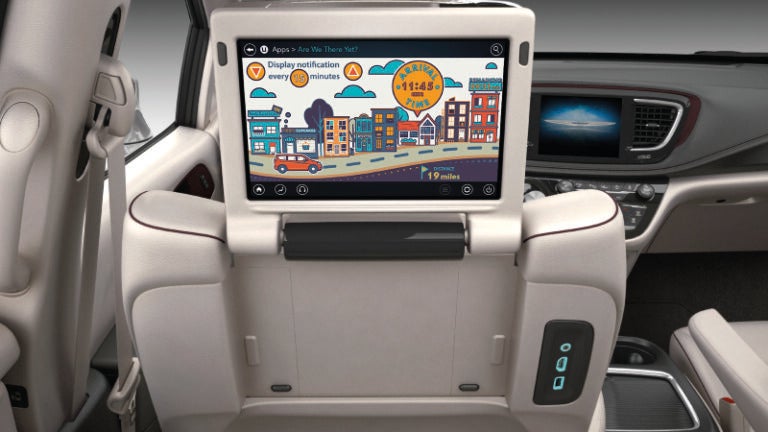
Chrysler’s new Pacifica—the company’s next generation of the minivan—has an answer for that, with its “Are We There Yet?’’ app (hey, you can’t make this up). It’s there, along with eight built-in video games, on the UConnect system’s twin 10.1-inch rear touch screens.
Kudos to the programmer who came up with the idea of tying the app into the route that’s being used in the minivan’s navigation system. The back screens show an animated route with a minivan (of course) moving from left to right with an estimated arrival time at the always elusive “there.’’
Instead of simply mirroring the navigation screen that the driver is using, the Chrysler are-we-there-yet app is an automotive version of the airplane simulation that shows your location, speed, and estimated arrival on long-distance flights.
Passengers who can’t reach the touch screens can use the screens via a remote that also has a touchpad.
We couldn’t help but notice that “The License Plate Game’’ was one of the video choices.
Mrs. G and I play that one on long trips, usually resorting to jotting them on a notepad once we start to argue whether a state has or hasn’t been found.
The best hunting seems to be in the Washington, D.C., area and the stretch of Rte. 95 from there to Quantico because traffic often is moving so slowly and there are lots of military and government people from all over the country.
We always figure that Alaska and Hawaii will be the toughest plates to find, but that usually isn’t the case. Instead, both Dakotas, Kansas, and Utah seem to give us the most trouble.
And you’re never too old for the are-we-there-yet game. I’m even playing a version of it now—looking to the end of this column (somewhere between 750-900 words) and asking, “Am I there yet?’’ The answer at this moment is no. The Microsoft word count says I’m still shy 500.
Crash Course
If you haven’t noticed, the folks at Google don’t like to admit fallibility. They also take umbrage at being required to have something as archaic as a steering wheel in their driverless-car developmental vehicles.
After all, the developers are used to using joysticks (the 21st century version of the tillers used in some of the first cars).
But, if computers can crash, so can cars, even autonomous ones. It leads one to ponder: If two autonomous vehicles were to crash on a lonely country road, how would anyone know?
So it was significant when Google said it “bears some responsibility’’ after one of its self-driving cars had an unpleasant encounter with a bus last month.
Their Valentine’s Day kiss happened with the Google car traveling less than 2 miles per hour and the bus, about 15 mph.
Google said both the vehicle (its program) and on-board driver believed the bus would slow or make way for the car, which had to move left to make a right turn because of obstacles in the road.
Back in November, Google said its cars had been involved in 17 accidents in more than 2 million miles of test driving.
Obviously, the incidents provide valuable programming fodder, but the unresolved issues of accountability and governmental regulation remain huge ones as this technology moves ahead.
Annoying Drivers (con’t.)
Despite my best intentions, your contributions to our annoying drivers annals have languished in my in box for too long.
This comes from Kim Salazar:
“This one continues to amaze us. We’ve named it ‘Boston Chicken.’ “It’s the gambit of executing a left turn from a side street onto a main road by incrementally inching out into traffic very slowly, until traffic from your left side is either intimidated into stopping or outright blocked. Then continuing to block that lane until traffic from the right is likewise stopped. Then completing the turn.’’
And Paul Connolly contributes this:
“I was coasting in bumper-to-bumper traffic in Watertown Square. I look to my left and a guy is shaving AND he has the newspaper opened up on his steering wheel. It was The Boston Globe of course.’’



To comment, please create a screen name in your profile
To comment, please verify your email address
Conversation
This discussion has ended. Please join elsewhere on Boston.com