
A keyless Volvo?; road deaths rising; ‘those snowbirds!’
Keyless ignitions are one of those advances that also have downsides.
Things seem to work OK if you park, shut the car down, and leave with the fob.
The system also seems to work well for folks who have become accustomed to the routine of leaving their keys in a handbag or briefcase and enjoying the automated keyless entry/ignition.
For those of us who tend to sit in the car, checking phone messages, listening to the end of a newscast or song on the radio, it’s easy to get the system out of sync—as in exiting with the car still quietly idling.
Fortunately, I’ve caught myself the few times it’s happened to me, something that can be particularly hard to notice in a silent-running hybrid. When not sure, I now restart the car, then shut it down, just to be safe.
But what would happen if I hadn’t noticed and had parked in an enclosed garage under the house? On one hand, there’s a danger of carbon monoxide poisoning, on the other, overheating and ruining the car.
So you have to pardon me if I’m not excited by Volvo’s announcement of an innovative advance, as it plans to offer vehicles with only a digital key for everyday use.
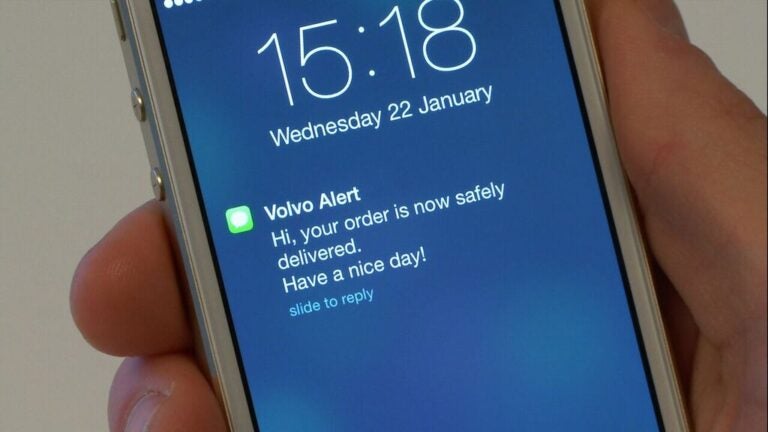
Volvo’s Bluetooth digital key technology runs off a mobile phone, allowing car owners to unlock (or lock) and start the engine via an app without taking the phone out of pocket or purse. It also enables them to share the key with others.
This device has enormous potential for rental companies and ride-sharing operations to send and authorize a digital key for renters, enabling them to make an online reservation and get a text message with both their key and car location. It would be nice to be able to bypass the line at the car rental counter at the airport.
It’s also good for one family member to leave a car and another to pick it up, all without exchanging any keys.
“We look forward to seeing how else this technology might be used in the future and we welcome any and all ideas,’’ says Martin Rosenqvist, a Volvo director of special projects.
For those of us who often forget our phones more often than our car keys, Volvo says physical keys will continue to be offered for people who want them.
Speaking of Volvos, Ray Ciccolo, CEO of the Village Automotive Group, was one of 15 dealers nationwide to earn the manufacturer’s President’s Award this month in Miami.
Ciccolo calls it “the most exciting Volvo meeting I’ve been to in the 50-plus years I’ve been selling Volvos. Volvo’s new product launches in the coming three years absolutely will help the company reach its US sales goal of 150,000 cars annually by 2020.
“It’s the only retailer conference I’ve ever attended where the dealers greeted the news with a spontaneous, rousing standing ovation.’’
Not-So-Safe Roads
According to the National Safety Council (NSC), there were 38,300 motor vehicle deaths in the United States in 2015, an increase of 8 percent over both 2013 and 2014 when the numbers were 35,369 and 35,398.
The NSC points to lower gasoline prices and an estimated 3.5 percent increase in miles driven in 2015 as factors.
In Massachusetts, the numbers were 334 motor-vehicle deaths in 2013, 348 in 2014 and 354 in 2015, an increase of 6 percent in the three-year period.
In Florida, there was a 26 percent increase over the three years from 2,352 in 2013 to 2,955 in 2015. The state total for 2015 was exceeded only by Texas (3,490) and California (3,249).
In contrast, New Hampshire fatalities dropped 16 percent from 135 to 114 during that time and Rhode Island was down 32 percent from 66 to 45.
As aggressive as Massachusetts drivers are, they’re also generally predictable. Also, traffic often is so heavy, especially in urban areas, that speeds generally are slow enough that the inevitable accidents are more fender-benders than fatalities. Traffic enforcement, it seems (by personal observation), is heavier in areas where traffic is lighter, speeds higher, and roads wider.
In contrast, Florida drivers seem to be driving an average of 10 to 15 miles an hour faster on both interstates and wide urban roads than they were five years ago. Locals get used to light traffic from May to October and many tend to respond to the influx of seasonals by driving more aggressively.
Another factor: The state doesn’t mandate safety inspections, which you have to expect means there are cars on the road with worn tires and brakes.
It all adds up to something that’s obvious when you pass a wreck: When things go bad in the Sunshine State, there’s less time to react and the crashes seem worse.
Story continues after gallery
The safest cars of 2016
[bdc-gallery id=”1431181″]
Those Snowbirds (con’t.)
It seems that our annoying drivers tales don’t stop in New England.
The following is a letter to the editor from the Naples (Florida) Daily News sent by Donna Bayless. Locals tell me out-of-state drivers’ habits are a common topic on the editorial pages. In truth, I’ve seen all of these moves mentioned multiple times. Perhaps the scariest local experience is a car in front just stopping for no apparent reason, creating chaos behind it, as the first driver searches for a turn.
Her letter.
“OK, we get it. You don’t know where you are going. But it IS against the law to stop in the middle of the road, turn left from a right lane or right from the left lane, sit blocking traffic to change lanes, disobey traffic signs, etc.
“In no state that I have been to is it legal to do any of these things, and I’ve been to a lot of states. If I ever visited your town, I would not do these things. I would pull over somewhere legally out of the way until I knew where I wanted to go.
“We have to wonder on our way to and from work or picking up our kids from school if we are going to be killed due to the illegal moves performed by out-of-towners.
“Maybe the local people would be a bit more tolerant of Snowbirds if you didn’t come into our town and break the law.’’




To comment, please create a screen name in your profile
To comment, please verify your email address
Conversation
This discussion has ended. Please join elsewhere on Boston.com