
Driver’s guide: What you need to know about rear cross traffic alerts
The basics
Last summer, a study by Ford indicated three quarters of younger drivers surveyed (including both millennials and members of Generation Z) are terrified of backing out onto a busy street.
Fortunately, many automakers are offering a solution to make backing out into traffic a little easier.
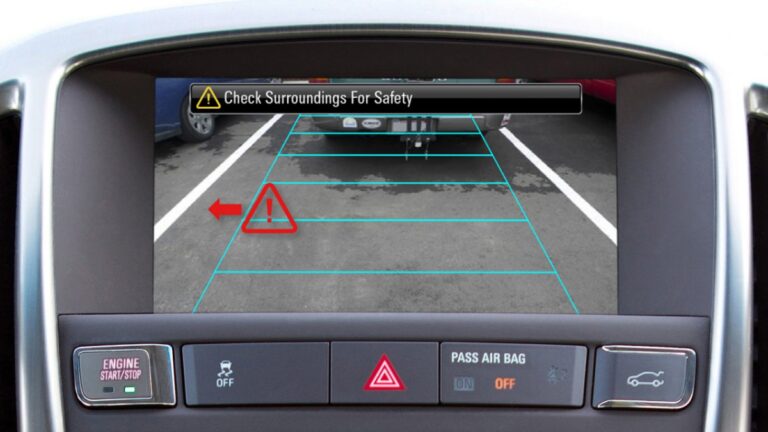
Rear cross traffic alert (RCTA) systems use a radar sensor positioned on the rear corner of a vehicle, similar to the sensors used in blind spot monitoring systems. It is meant to detecting oncoming vehicles or pedestrians and alert the driver before a collision occurs.
To warn the driver, the system may either deliver an audio alert like a chime or an indicator light may flash on the side mirror.
David Aylor, manager of active safety testing for the Insurance Institute for Highway Safety, says RCTAs are very useful in helping motorists avoid low speed crashes. These types of crashes are particularly common in parking facilities, said Aylor.
“We know reversing crashes are pretty common in parking lots,’’ said Aylor. “[RCTAs] offer a way for manufacturers to alert the driver that those cars are coming and tells drivers ‘don’t back out’ in a certain parking situation.’’
The history
RCTA technology started to emerge in the year 2010. IIHS does not have a record of which vehicle was the first to debut the system. However, the 2011 Chrysler Town and Country was the first to offer it as a standard feature.
Today, Aylor says most auto manufacturers offer some form of RCTA, at least as an option with a package of safety features.
How effective is it?
Aylor says RCTAs can help motorists avoid minor, but costly, collisions with other vehicles.
“The biggest potential for this technology is property damage crashes,’’ he said. “It’s not necessarily a higher speed situation, but it could prevent a property damage situation where you back out and another car crosses your path.’’
He says the technology is especially helpful when a car is parked next to a larger vehicle like a van or a large truck, limiting the driver’s visibility.
Aylor also believes senior citizens who face mobility challenges from conditions like arthritis and diabetes may find the technology particularly useful.
“Backing up is a difficult task for an older driver,’’ said Aylor. “We know older drivers have lower mobility and turning their heads can be a challenge.’’
Aylor said it’s important for consumers to understand if their vehicle is equipped with an RTCA and how it works.
“If they get an alert, they’re aware there is a car coming towards them in a perpendicular direction,’’ said Aylor. “With any of these technologies, it’s important for drivers to understand how it works and what the system is trying to tell them.’’
But the technology is not perfect. A recent study by AAA found “significant system limitations’’ with RCTAs. For example, AAA’s study found the systems tested failed to detect motorcycles, bicyclists, pedestrians and moving vehicles at “alarming rates.’’
In light of these findings, AAA recommends motorists consider RCTAs a support feature, not a substitution, for safe driving behavior.



To comment, please create a screen name in your profile
To comment, please verify your email address
Conversation
This discussion has ended. Please join elsewhere on Boston.com