
Driver’s guide: What to know about blind spot monitoring
The basics
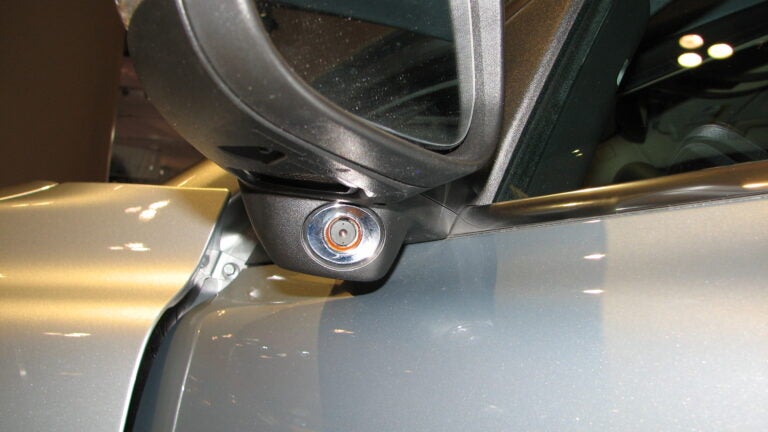
Blind spot monitoring systems, also known as blind spot detection, use a series of sensors on the sides of a vehicle to detect if other vehicles or objects are just outside a driver’s line of sight.
If the car detects that the driver intends to switch lanes while another vehicle is within the driver’s blind spot, the system alerts the driver by sounding a chime, or through a blinking light on the vehicle’s side mirror, or by vibrating the steering wheel.
Russ Rader, senior vice president of communications for the Insurance Institute for Highway Safety (IIHS), points out that blind spot monitoring technology is often used together with lane departure warning systems.
“Drivers don’t always detect vehicles in their blind spot, but this technology can help,’’ said Rader. “This is a technology that provides an extra set of eyes to help keep drivers out of common crash scenarios.’’
Story continues after gallery
Check out the safest vehicles of 2016
[bdc-gallery id=”1431181″]
The history
Volvo was the first automaker to introduce the technology to the U.S. market. In 2007, the Volvo S80 and XC90 came with available blind spot monitoring. A year later, the 2008 Cadillac STS-V became the first vehicle to offer blind spot monitoring technology as a standard feature.
When the technology first started to emerge, Rader says, it was only available in about 1 percent of all vehicles. Today, he says almost 50 percent of all new vehicles are equipped with blind spot detection technology.
“We expect more than half of new cars will offer blind spot detection in 2016,’’ he said.
How effective is it?
Rader says while IIHS understands the potential of blind spot technology to prevent collisions, it is too early to determine their effectiveness.
“The jury is still out,’’ said Rader. “The data from the insurance claim data is still a little thin because we don’t have enough vehicles with these systems and enough crashes to study.’’
But Rader says based on data that is available, IIHS is seeing a decrease in property damage and liability claims and some reduction in bodily injury claims. With this in mind, blind spot monitoring could help prevent hundreds of thousands of collisions each year.
“If blind spot warning systems were on all vehicles and worked as advertised almost 400,000 crashes could be prevented or mitigated each year,’’ said Rader.




To comment, please create a screen name in your profile
To comment, please verify your email address
Conversation
This discussion has ended. Please join elsewhere on Boston.com