
Driver’s guide: How automatic crash notification can save your life
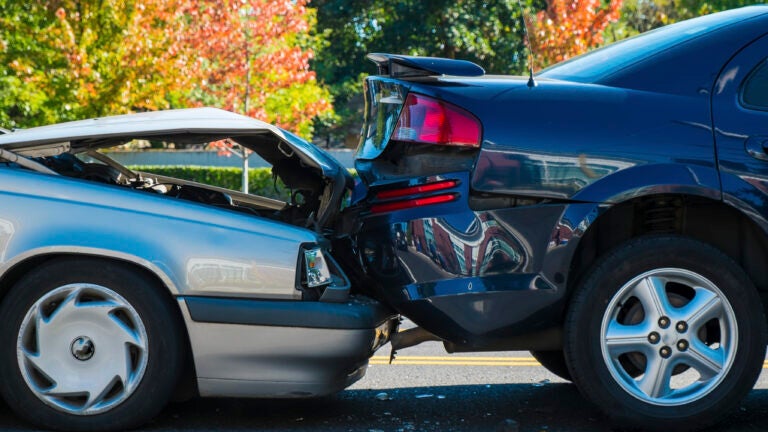
There are roughly 33,000 motor vehicle fatalities per year in America, according to data from the US Department of Transportation.
When a crash occurs, it is critical to get help to the victims quickly. While smartphone technology has become widely available and more integrated into several vehicles, motorists and occupants who have been a vehicle collision may not always be able to reach their mobile devices to call for help. And if the occupants do not know their exact location, it can take emergency responders longer to reach the scene of the crash.
Automatic crash notification (ACN) systems aim to solve those problems. They started to debut in the late 1990s, with General Motor’s OnStar service leading the charge. OnStar debuted on several Cadillac models in 1996.
Stephen Ridella, director of the Office of Vehicle Crashworthiness Research for the National Highway Traffic Safety Administration (NHTSA), says vehicles equipped with ACN technology have the potential to save between 150 and 300 lives each year by offering valuable information during the emergency triage process.
“There’s something called a ‘golden hour’ where if you get a person to a physician with one hour [of a serious injury] their chance of survival goes up a lot,’’ said Ridella in a phone interview.
“ACNs provide a lot of potential life-saving issues for people because a lot of people in car crashes never make it to the hospital,’’ he said. He says too many people in crashes die en route to the hospital or shortly after arrival.
Story continues after gallery
Check out the 48 safest vehicles of 2016
[bdc-gallery id=”1431181″]
How it works
Automatic crash notification systems are also known as automatic collision notification systems. In the event of a crash where the airbag deploys, vehicles equipped with ACNs send a signal to a third party, known as a telematics service operator, who attempts to reach the driver and assess the damage.
If the operator cannot reach the driver, he or she can alert emergency services to the scene of the crash using the vehicle’s GPS.
Since the first ACN systems made their debut, the technology has developed further to include advanced automatic crash notification (AACN) systems. As their name suggests, these systems are more advanced than their predecessors because they can transmit specific vehicle information – such as whether or not a seat belt was in use during the crash, any change in speed the vehicle experienced, or the direction of impact – to anticipate the severity of injuries and what kind of emergency resources should be dispatched.
This is the real advantage of AACN systems, says Ribella. They can allow emergency responders to get important information on a crash’s severity before they arrive on the scene.
According to a 2013 research paper on ACN effectiveness conducted by NHTSA, emergency responders are alerted to a crash within two minutes for all vehicles equipped with ACNs. However, for 20 percent of vehicles not equipped with an ACN emergency notification time is over five minutes.
In the case of crashes that occur in more rural locations, the data could tell emergency responders if an ambulance or a helicopter will be able to reach the injured faster.
ACN systems can vary by manufacturer. Some require a cell phone to be synchronized with the car while others do not. Some offer their systems free for a certain period of time then charge consumers at a tiered level. Some use Bluetooth to call 911 directly while others call a third party who then reaches out to emergency responders.
Ridella says he hopes automakers realize the life-saving potential of ACNs and make the technology more widely available.
“We won’t rate cars differently for not having it but we want to make the industry aware that we believe this technology can save lives,’’ he said.
Of course, there are times when an emergency response system can haunt a driver more than help them. For example, a Florida woman was recently arrested for fleeing the scene of a hit-and-run incident after her car’s emergency notification system alerted police that her car was involved in a crash.




To comment, please create a screen name in your profile
To comment, please verify your email address
Conversation
This discussion has ended. Please join elsewhere on Boston.com