
Your car’s value will start dropping faster this year
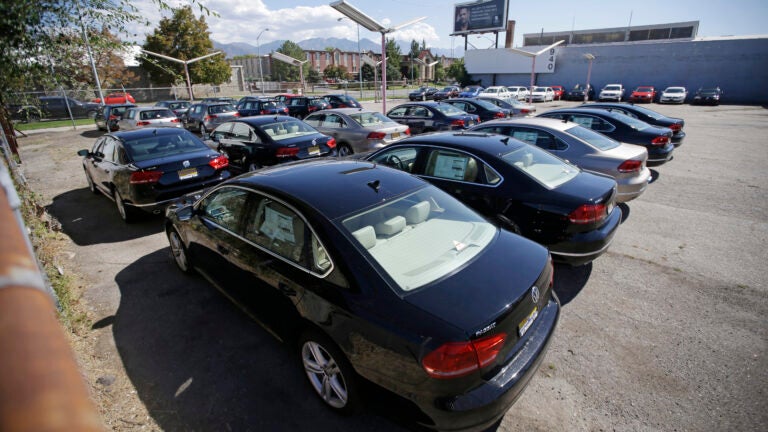
According to automotive analysis firm Black Book, your car is about to start losing its resale value much more quickly than it has over the past few years.
During 2015, 3-year-old vehicles could be resold, on average, for 51.2 percent of their original purchase price, the highest “value retention’’ rate recorded since 2005.
Vehicle value, or price, retention refers to the value of a car, truck, or SUV three years after its original purchase.
Three-year-old vehicles also retained 51.2 percent of their value in 2014 and 51.1 percent in 2013, according to Black Book’s Market Insights Report.
But the groups says vehicle price retention is expected to drop starting next year.
Black Book predicts vehicle price retention will be 48.8 percent in 2016, drop again to 45.9 percent in 2017, and fall again to 43.6 percent in 2018.
Edmunds.com agrees vehicle value retention rates will start to decline over the next few years. But the automobile research company does not believe vehicle value will decline quite as rapidly as Black Book predicts by 2018.
For consumers with a car they’re thinking of selling, Black Book’s vice president of automotive valuation and analytics Anil Goyal says his best advice is to act fast.
“Our advice is do not wait,’’ he said. “The longer you keep a car, the more it will lose value.’’
But while he expects vehicle price retention rates to drop, Goyal does not see a “bubble bursting’’ for the automotive industry.
What we’re seeing now is vehicle value retention return to more “normal,’’ pre-recession levels.
“We’re not seeing economic data suggesting we are entering a contraction phase,’’ he said. “It’s going to be returning to normalcy in a smooth fashion over the next few years.’’
Story continues after gallery
Cars with the best resale value in each category:
[bdc-gallery id=”1427933″]
Why?
When the recession hit in 2008, vehicle value retention fell to its lowest point of 38.7 percent. By the following year, as the recovery began and the government invested millions of dollars in helping the U.S. auto industry recover, value retention started to improve gradually.
As the economy has improved and unemployment rates have dropped, vehicle price retention has been steadily climbing. But after seven years of improving price retention, Goyal says the trend is now moving downwards, into the same patterns that were seen before the recession.
This is because as more and more people return to work, they becoming more interested in newer models than older ones. This means less consumer demand for used vehicles.
Goyal also points out that consumers are now ready to give in to their “pent up demand’’ for a new car. He also notes that banks are more willing to issue auto loans, fuel prices are lower so consumers are more interested in driving, and manufacturers are offering redesigned vehicles that have consumers excited.
Put together, these factors are convinving people they can and should spring for a new car and contributing to the value depreciation of older cars.




To comment, please create a screen name in your profile
To comment, please verify your email address
Conversation
This discussion has ended. Please join elsewhere on Boston.com