
Driver’s Guide: What to know about side air bags
The basics
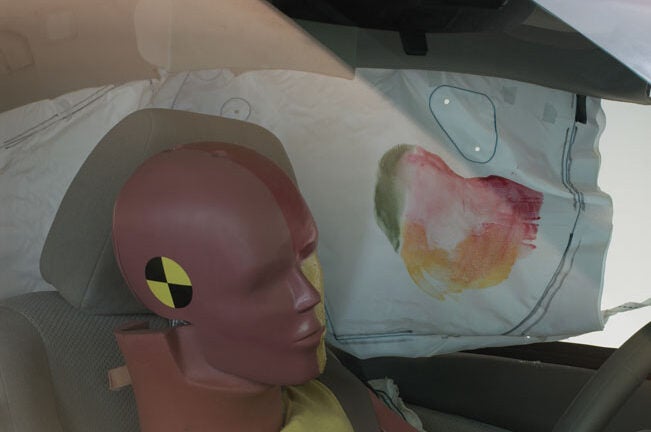
Side air bags are specifically designed to protect an occupant’s head and body in the event of a side-impact collision.
According to SafeCar.gov, the online home of the National Highway Traffic Safety Administration, there are three types of side air bag (SAB) technologies. First, chest or torso air bags are mounted on the side of a vehicle’s seat or door and are meant to protect an occupant’s chest region in the event of a crash.
Second, head SABs are mounted on the roof rail of a vehicle and are designed to protect an occupant’s head during a side-impact crash. Head SABs are available in curtain and tubular formats.
A third head/chest or “combo’’ SAB system is found in the side of a vehicle’s seat and are designed to give extra protection to an occupant’s head and chest during a side-impact crash.
History
According to Russ Rader, the Insurance Institute for Highway Safety’s senior vice president of communications, the 1998 BMW 5 Series was the first production car to offer head-protecting SABs. Volvo introduced torso SAB on the 1995 850 sedan and wagon and made the technology standard on the 850 in 1996.
When the IIHS first tested BMW’s head-protecting side air bag technology in 1997, the safety organization was instantly impressed.
IIHS performed two side-crash tests on BMWs, one of which was equipped with a side air bag system. Each test propelled a car sideways at 20 mph into a rigid pole.
IIHS found that occupants of the first car, which was not equipped with the head-protecting air bag system, were four times more likely to suffer a serious head injury such as a skull fracture. In the second test, the vehicle equipped with SAB experienced “major intrusion’’ from the crash but the risk of serious injury to occupants was considerably reduced.
The institute determined side air bag technology had significant potential to protect occupants from serious head injury or death in the event of side impact collisions.
“This new BMW head protection system is a clear advancement,’’ said then-president Brian O’Neill. “It will save lives by preventing head injuries in crashes that, without this system, would be fatal.’’
Story continues after gallery
The safest cars of 2015
[bdc-gallery id=”1428162″]
How effective is it?
According to IIHS figures, frontal air bags can reduce driver fatalities in frontal crashes by 29 percent. Meanwhile side air bags can cut the risk of death in driver-side crashes by 37 percent for cars and 52 percent for SUVs.
“It’s one of the most important safety advances of the last 20 years because side-impact crashes are the second-most common type of fatal crash,’’ said Rader in a phone interview.
One of the reasons side air bags are so important is because, unlike a front-end impact, there is less vehicle structure that can protect occupants in the event of a side crash.
“Side air bags can mean the difference between life and death in many severe side-impact crashes,’’ said Rader.
“Often it is head injuries that lead to death in side impact crashes,’’ Rader continued. “Automakers began to look at ways to use air bags to cushion the head and keep it from being struck by the front end of another vehicle coming in or a tree or a pole if the vehicle is sliding sideways into something.’’
Adoption and regulations
Rader says that all vehicles have side air bag technology, although it is not required by any federal safety regulations. However, without side air bags installed, it is virtually impossible for a vehicle to successfully meet federal performance criteria or pass important safety tests.
Also, Rader says vehicles would struggle to get IIHS’s top honor without side air bag technology installed.
“A vehicle has to get a good rating in the side-impact test to get a Top Safety Rating,’’ he said, referring to the institute’s annual list of safest vehicles. “It’s very difficult for a vehicle to get a [good] rating in that test without side air bags… It’s impossible without side air bags.’’





To comment, please create a screen name in your profile
To comment, please verify your email address
Conversation
This discussion has ended. Please join elsewhere on Boston.com