
2016 Toyota Prius boasts sharper styling, even better mileage
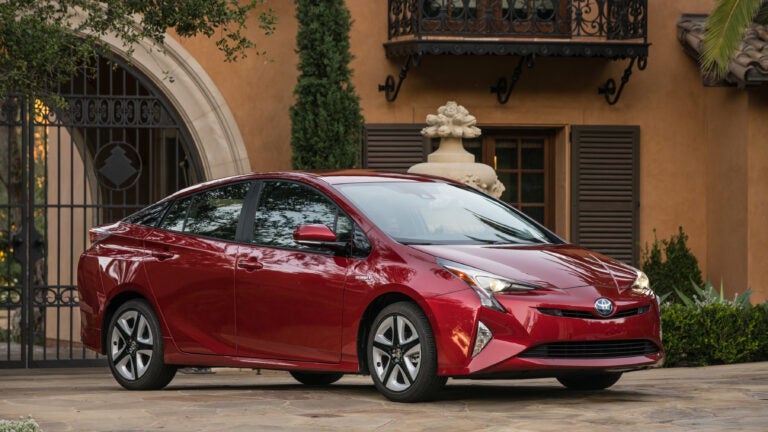
Toyota may be onto something with the 2016 Toyota Prius. It’s made the No. 1-selling hybrid vehicle a sedan that people want because it’s a good car—not just for its high fuel economy numbers.
This midsize sedan no longer feels like a compromise. It’s become a vehicle that stands on its own, with only one limitation, its powertrain. You can’t achieve 54 mpg around town and do 0-60 in six seconds.
Let’s get the numbers out of the way before talking about other improvements. The 2016 Toyota Prius is rated at 54 mpg city, 50 mpg highway, and 52 mpg overall. During a recent media-first drive in Southern California, I did my best to get poor fuel efficiency with jackrabbit acceleration and speeds over the posted limited. In spite of my worst efforts, I still maintained 43.8 mpg.
I couldn’t get the Prius to drop below 40 mpg, according to the onboard computer. Wayne Gerdes, a fuel economy guru from CleanMPG.com, tested the onboard computer and found it slightly conservative to boot, so your fuel economy is probably going to be better than the onboard computer suggests.
One could only imagine what fuel economy could be achieved with the Prius Two Eco model. It’s rated at 58 mpg city and 53 mpg highway for a combined rating of 56 mpg. Probably the only way to get fuel economy below 40 mpg is by towing another Prius behind you. I didn’t have the opportunity to spend extended time behind the wheel of this model but there’s no obvious difference in general driving dynamics.

BETTER AND BETTER: Thanks to upgrades in torsional rigidity and a double wishbone suspension, the Toyota Prius demonstrates strong handling capabilities, something not previously associated with the hybrid.
The 2016 Toyota Prius comes with different batteries, depending on which model you purchase. The base model has a new nickel-metal hydride hybrid battery while the other trim levels use the new lithium-ion batteries. Both use existing technology but are more dense in terms of energy output. This allows the battery to move under the rear seat, which frees up cargo space. The Prius 2, with a spare tire, has 24.6 cubic feet of space. Other trim levels come with the tire repair kit and 27.3 cubic feet of space.
But enough about the stuff you can’t see or feel: Toyota has created a sedan that handles well, looks fairly sharp, and has a compelling interior. With regards to the interior, one Toyota exec put it well when he said it’s like going from an Atari to PlayStation.
Let’s discuss handling first since this is the first time one can put handling and Prius in the same sentence. The Prius sits on an all-new platform that is 60 percent more rigid than the previous generation. Toyota set up a handling course that the Prius handled at increasingly higher speeds. Also improving handling is a new double wishbone rear suspension that is fully independent. It really helped the Prius stay flat through corners.
That focus on handling is another demonstration that Toyota is building a sedan that stands on its own—and just happens to get great fuel economy. In the past, Toyota didn’t invest this kind of effort into its popular hybrid. But now with fuel prices lower, the company knew it had to deliver a more complete package.
Story continues after gallery
Toyota Prius and other new cars with strong gas mileage
[bdc-gallery id=”1424174″]
Something else Toyota has done is install new seats in the Prius. Following the trend of Nissan and Mazda, the seats are lighter weight for fuel savings but also designed to take stress off your back. One gets the sense you could drive for hours and still be comfortable.
Those who face regular commutes in heavy traffic will appreciate the available new dynamic cruise control. It’s the first Toyota system with full speed control. It will take you down to zero and, with a tap of a button, bring you back up to speed.
A demonstration was set up to show how the system works if traffic stops suddenly in front of you. First, it audibly warns, flashes a visible warning, and then, if you’re still not paying attention, slams the brakes on and brings you to a stop. My only concern is that people will be more tempted to use smartphones while driving because the car will protect them. Beware, though: It only works above 7 mph.
Anything wrong with this sedan? You won’t like its acceleration, which I tested at 10.4 seconds for 0-60 with two people in the car. Fuel efficiency and full power just can’t co-exist. Also, one thing Toyota didn’t improve with the Prius is its rear-window visibility. You’re outward view is still bisected by its hatch design. Otherwise visibility is fairly good.
2016 Toyota Prius
THE BASICS
Price, base (with destination): $25,095. Fuel economy: 54 city/50 highway/52 combined. Drivetrain: 1.8-liter. Hybrid: Midsize sedan.
THE SPECIFICS
Horsepower: 121 @ 6,000 rpm. Torque: 120 lb.-ft. Overall length: 178.8 in. Wheelbase: 106.3 in. Height: 58.7 in. Width: 79.1 in. Curb weight: 3,075 lbs.
THE GOOD
Amazing fuel efficiency, engaging new design. Interior is night and day better than earlier models, and handling has improved threefold.
THE BAD
The rear view is still obstructed, a flaw of the Prius since its introduction. Also, some might not like the fact that it sits lower, which could be uncomfortable for older drivers.
THE BOTTOM LINE
Toyota has succeeded in creating a sedan that stands on its own and improving its fuel efficiency.
THE BASICS
Price, base (with destination): $25,095. Fuel economy: 54 city/50 highway/52 combined. Drivetrain: 1.8-liter. Hybrid: Midsize sedan.
THE SPECIFICS
Horsepower: 121 @ 6,000 rpm. Torque: 120 lb.-ft. Overall length: 178.8 in. Wheelbase: 106.3 in. Height: 58.7 in. Width: 79.1 in. Curb weight: 3,075 lbs.
THE GOOD
Amazing fuel efficiency, engaging new design. Interior is night and day better than earlier models, and handling has improved threefold.
THE BAD
The rear view is still obstructed, a flaw of the Prius since its introduction. Also, some might not like the fact that it sits lower, which could be uncomfortable for older drivers.
THE BOTTOM LINE
Toyota has succeeded in creating a sedan that stands on its own and improving its fuel efficiency.








To comment, please create a screen name in your profile
To comment, please verify your email address
Conversation
This discussion has ended. Please join elsewhere on Boston.com