
AAA: Older people get worse after losing the right to drive
The non-profit motor safety agency points to an increase in physical, mental health issues after driving cessation.
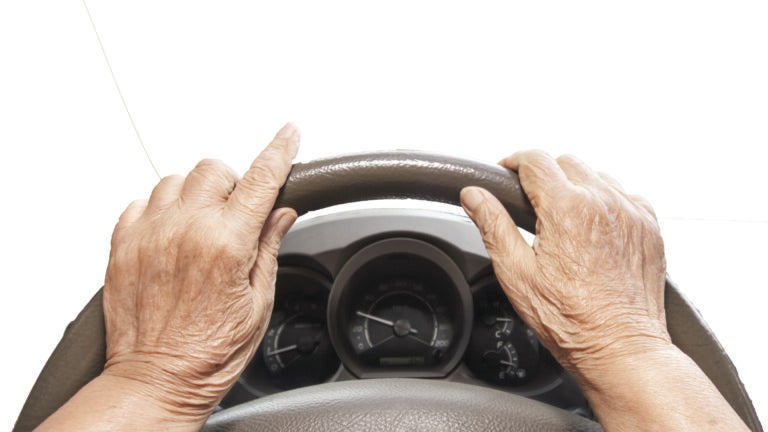
As a teenager, getting your driver’s license and feeling those car keys drop into the palm of your hand is an indescribable moment.
It’s a rite of passage that means greater responsibility, more freedom, and is largely seen as a major milestone on the road to adulthood.
So imagine how it feels when those car keys are given up or taken away at a later stage in life.
A recent study by the AAA Foundation, “Driving Cessation and Health Outcomes in Older Adult,’’ reviews 16 scientific reports that indicate a strong relationship between the loss of driving privileges and deteriorating physical and mental health later in life. The AAA review found former drivers demonstrated lower productivity, participated less in outdoor activities, and faced a greater risk of depression symptoms than current drivers of a similar age.
In addition, former drivers experienced a considerable drop in social activity, diminished cognitive ability, and in some cases were five times more likely to be admitted to a long-term care facility.
The decision to stop driving, whether it’s made by self-regulation or by an older driver’s family, is not an easy one to approach. But as more baby boomers grow older, it’s a decision thousands will be forced to confront.
Story continues after gallery
Check out IIHS’s Top Safety Pick+ Winners of 2015
[bdc-gallery id=”1428162″]
According to the Census Bureau, more than 20 percent of the U.S. population will be aged 65 and older by 2030, compared to only 13 percent in 2010. Meanwhile, the Insurance Institute for Highway Safety points out that drivers aged 70 and older experience a higher rate of car accidents per miles traveled than middle-aged drivers.
But while AAA’s review of these studies highlights a link between losing the right to drive and increased health problems, it does not add up to hard scientific evidence that driving cessation causes declining health later in life. The AAA Foundation is working on its own study to learn more about the connection.
The Foundation’s LongROAD project will study 3,000 drivers aged 65 and above over several years to examine the driving behaviors of older drivers. The project will study the effects of driving on seniors and the effects of medications, physical limitations, medical conditions, and more. The study will also look at the circumstances of elder driving cessation, such as whether the decision was reached autonomously, as a result of family intervention, or after an accident.
The head of the AAA Foundation acknowledged there is a “catch-22’’ when it comes to getting older and losing the right to operate a vehicle. The study is meant to shed light on whether older drivers who lose or surrender their right to drive suffer greater health consequences as a result of driving cessation or because they were already experiencing the natural progression of old age.
“No study can prove causality, but they prove a strong correlation between losing driving privileges and health effects,’’ said AAA Foundation president and CEO Peter Kissinger in a phone interview with Boston.com.
“We certainly know that declines in general health do in fact lead us towards giving up your keys and cessation,’’ said Kissinger. “At the same time, the main focus of our research shows driving cessation tends to reduce [former drivers’] health and social and mental functions.’’
Kissinger told Boston.com his hope is the LongROAD study is to provide scientific evidence that helps individuals, families, caregivers, and health providers make more informed choices when it is time to make the decision for a senior to give up driving.
“The reality is everyone drives differently,’’ said Kissinger. “The more information we have, the better we’ll be. We’re here to get that science to help people make better decisions.’’



To comment, please create a screen name in your profile
To comment, please verify your email address
Conversation
This discussion has ended. Please join elsewhere on Boston.com