
A Disgusting Reminder to Change Your Oil
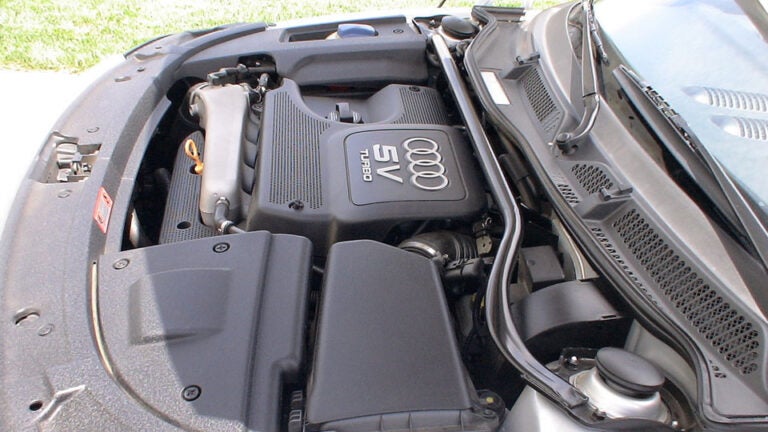
Drivers putting off an oil change might reconsider after looking at pictures of this Audi TT’s engine. First posted on Reddit and featured on Jalopnik.com, this engine was allowed to “atrophy’’ without an oil change for 84,000 miles.
[fragment number=0]
Oil is the essential lubricant to a car’s engine – “the lifeblood of a car,’’ according to John Paul, manager of public affairs for AAA Southern New England and Boston.com’s Car Doctor. Without it, the pistons moving up and down in the cylinders won’t have anything preventing metal-on-metal friction, and they could eventually produce enough heat to weld together, seizing the engine.
But even if there’s enough oil in a car’s engine, that oil needs to be maintained through oil changes.
Experts disagree over just how often drivers should get this done, but suggest that motorists follow whatever schedule their car manufacturer recommends. Paul said if motorists live in a dusty, snowy, or salty area, they probably need to get oil changes more often, following their manufacturer’s “severe service engine schedule,’’ rather than a “normal service engine schedule.’’
“We live in an area that can fall under a lot of ‘severe service’ categories,’’ Paul said of Greater Boston. “There’s dusty road conditions, and a lot of pollen and dirt on the road, especially this winter. That dust and dirt can end up inside the engine as a contaminant that can hurt the engine.’’
Following a “severe service engine schedule’’ might mean that a motorist should get his or her oil changed twice as often, Paul said. For instance, if a driver has a 2011 Toyota Corolla, he or she should get an oil change every 10,000 miles or once a year, Paul said. But on a severe schedule, that timetable is halved to 5,000 miles or every six months.
Severe conditions involve rough, muddy, salty or snow-covered roads, Paul said. Drivers who engage in extensive idling or commute at low speeds over long distances should also consider more frequent oil changes.
But Edmunds Senior Consumer Advice Editor Paul Reed said ‘severe’ driving conditions are often overhyped by car servicers who want to up their business. “Normal is normal and severe is reserved for ambulances, police cars and construction vehicles,’’ Reed said, arguing that the average commuter – even those who survived Boston’s record-breaking winter snow – can safely follow their manufacturer’s normal service recommendations.
Regardless of the debate over how often drivers should get their oil changed, experts agreed that old, dirty oil is bad for engines.
Dirty oil is thicker than clean oil, and can clog the car’s filter. Once the filter is clogged, dirty oil bypasses the filter through a relief valve and the coagulated, soiled oil further abrades the engine.
Aging oil also breaks down and loses its viscosity (or ability to flow), becoming thicker and less effective at cushioning all of an engine’s parts. Additives in the oil – rust-fighters and detergents – also eventually thin out, losing their ability to lubricate all the parts they need to, Paul said.
Letting the engine oil get too low (or dirty) can also affect the engine’s temperature, Paul added. “Oil contributes to engine cooling and makes your engine run properly,’’ he said. “It can overheat because engine oil gets low.’’
Oil changes can run anywhere from $19.99 to close to $100 depending on the car, and drivers should make sure the oil and oil filter used by servicers meet their car manufacturer’s standards, Paul said. The cost may seem high, but waiting too long for an oil change could cause engine failure, Paul added, mentioning that fewer people today seem to be maintaining their cars’ engine oil than in the past.
“I think way back when, when people used to change their oil every 3,000 miles and cars used a little bit more oil, people were more in tune with checking the oil of their car,’’ Paul said. “Whereas today, cars are relatively trouble free and people don’t check under the hood as often.’’




To comment, please create a screen name in your profile
To comment, please verify your email address
Conversation
This discussion has ended. Please join elsewhere on Boston.com