
Auto Theft Now Driven By Identify Theft and Fraud
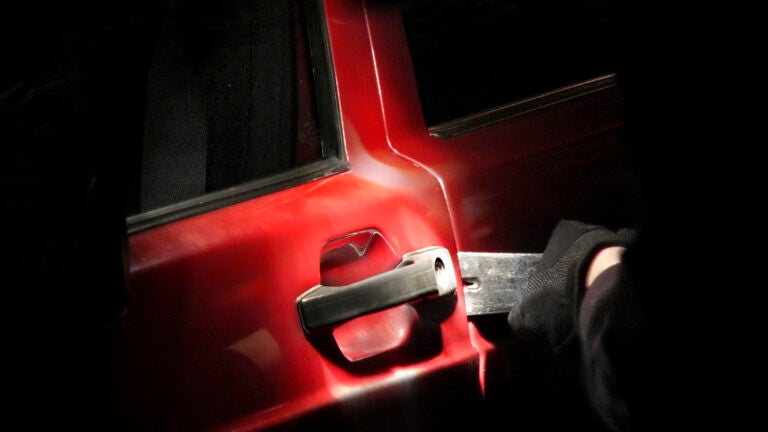
The days of hotwiring cars and jimmying door locks seem to be over, thanks to updated anti-theft technology. But are car thieves getting more creative?
Auto thefts in the Bay State – once the country’s motor vehicle theft capital – have plunged about 90 percent in the past four decades.
At its peak in 1975, Massachusetts ranked third nationwide (behind California and New York) in total annual thefts at 91,563, and the state remained in the top 10 states for auto theft until 1992, according to
National Insurance Crime Bureau stats. The state ended 2013 with 9,122 thefts.
Transponder keys, which transmit a radio signal to the car in order to start the ignition, have contributed to the decline because they prevent cars from being started without the presence of the device.
Virtually every new vehicle now come standard with transponder keys and immobilizing devices, and they have been very effective, said Russ Rader, senior vice president for communications at the Insurance Institute for Highway Safety.
Other features that have played big roles include “superior alarm systems in newer cars’’ and technology like the LoJack Stolen Vehicle System — a tracking and recovery system for stolen cars — and OnStar systems, according to Mass. State Police spokesperson David Procopio.
There were 1,592 motor vehicle thefts in Boston last year, continuing a downward trend from 2009, when there were 2,250 incidents and much lower than in 1975, when there were 28,000 incidents, according to Boston Police Department spokesperson Mike McCarthy.
The rapid declines, coupled with budgetary restraints at the time, led the Mass. State Police to disband its auto theft unit in December 2012. “We could have a greater impact on public safety by putting troopers to road patrols instead of keeping the auto theft task force in an age where the number of theft have decreased significantly,’’ Procopio said.
Does this mean cars in Massaschusetts are safe nowadays?
“Now it’s about forging, fraudulent schemes, and resale of vehicles,’’ Procopio went on to add.
One of the main ways thieves are working around the transponder technology is simply by taking the transponder key, according to a NICB report.
Thieves will often fake paperwork to give to a dealership or bank, pretend to be the real owner of the car, or go to a locksmith or dealership to get another copy of the key, the report said.
The thieves have to obtain a car’s Vehicle Identification Number (VIN), and there are many cases where thieves have copied VINs or simply made up nonexistent ones. They will often resell the stolen vehicles in the U.S. or export them to foreign countries where the cars could be worth more, the report continued.
Another rising problem is financial fraud, where individuals commit identity theft, forgery, and loan fraud. Perpetrators will finance a car based on stolen or fraudulent information or identities. In some cases, it can take months for dealers or banks to discover the fraud, according to the NICB report.
“Car dealerships are eager to still make these sales to stay in operation,’’ said Ivan Blackman, director of vehicle operations at NICB.
Another popular crime involves rental cars. The thieves might make copies of the key after they rent the cars, return the car, and then steal the vehicle from the rental lot or elsewhere at a later time.
Blackman noted that as a result of these new types of crime, auto theft numbers “haven’t gone down to the degree that various organizations have reported.’’
Vehicles obtained through financial fraud or stolen from rental car companies often don’t make it into theft databases, he continued.
“Because there’s a contract involved, it looks to be a civil case, not a criminal case,’’ Blackman said, adding that he has worked with rental car companies who couldn’t get their cases reported to the police as auto theft cases.
Victims of identity theft will have to take action by filing a police report, requesting a credit report, as well as dealing with banks, car dealerships, and insurance companies, Eva Velasquez, president and CEO of the Identity Theft Resource Center told Insurance.com.
Using identity theft to purchase a vehicle is a “new and creative way for thieves to monetize our data,’’ she added.





To comment, please create a screen name in your profile
To comment, please verify your email address
Conversation
This discussion has ended. Please join elsewhere on Boston.com