
Best Ways to Protect Your Car From the Cold
Last week, my car battery died. Granted, it was over three years old (which is around how long they typically last), but the cold temperatures probably didn’t help. I also let my car sit for a few days without starting it up. Whoops.
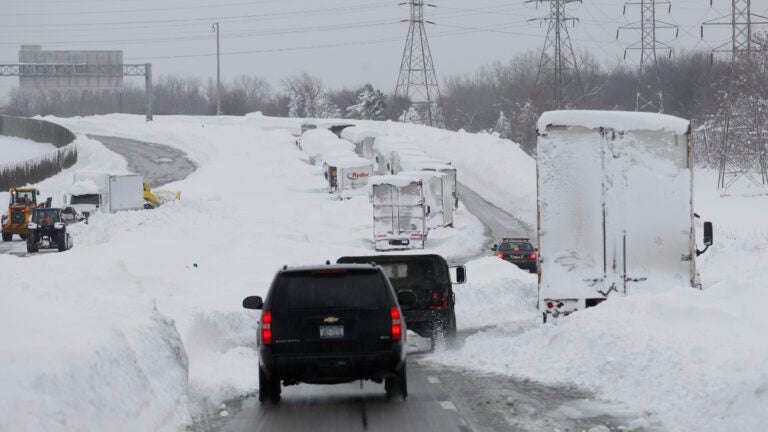
Whether it’s 100 degrees or -10, extreme weather is hard on cars. With temperatures in Boston dropping into the teens and lower this week, you should know some tips for protecting different parts of your car.
Battery
Your car battery is your vehicle’s livelihood – without it, your car’s starting, lighting, and ignition powers are kaput. Most batteries last between three and five years, but extreme cold can freeze your battery “like a stone,’’ Dan Capuano said. Capuano, a mechanic at Putnam Lane Auto Repair in Worcester, said your battery is the most important part of your car to protect in this weather.
“Your battery is an acid and water mixture,’’ Capuano explained. “When it gets really cold, water freezes.’’ According to AAA’s Automotive Research Center, at 32 degrees Fahrenheit, your battery loses 35 percent of its strength.
Luckily, you can prevent your battery from dying by driving your car everyday. Starting up your car recharges and warms up your battery. But Capuano said a quick trip across the street won’t do the trick: “If you start the car, make sure you start it for enough time to recuperate the battery loss from starting it. Start your car, and let it run for at least 10 minutes before turning it off.’’
Engine
The oil in your engine has very thick viscosity like “maple syrup,’’ Capuano said. When it’s cold, your oil thickens even more, and if you don’t warm your engine long enough to get oil to all the moving parts, the oil can “congeal in the wrong places,’’ he said.
You can prevent the ‘maple syrup effect’ by driving your car regularly, on trips that last longer than five minutes.
Tires
Think of your tires as your car’s shoes. Just as you wouldn’t want to walk around outside in holey old shoes, neither would your car, which is why you should always check your tire pressure – especially in winter.
According to Pep Boys, for every 10-degree drop in temperature, your tires lose a pound of air pressure.
Most modern cars have tire pressure sensors that will alert the driver on the dashboard when tire pressure is low, but some older models do not. In that case, you should check your pressure once a week with a tire pressure gauge or at a gas station, Capuano said. You can usually get a gauge under $20 at an auto shop or on Amazon.
If your pressure is low, your car might “wallow,’’ which Capuano described as “driving kind of mushy.’’ This is unsafe, and could prevent your car from being able to handle emergency situations, like swerving around something in the road. Plus, your fuel economy will drop significantly. You can fill your tires with air at most gas stations.
If you can afford them, Capuano recommends getting snow tires, which have better traction for inclement weather. “But if you have to go without, go slow,’’ he said. “Avoid hard breaking and acceleration, or your car might lock up or spin off.’’
Brakes
Though brakes aren’t drastically affected by extreme cold, Capuano said you should still make sure they’re working properly – especially in sleet, rain, and snow, when slippery conditions can make it harder to brake. You should get them checked every other oil change, he said, but if they ever feel funny to you, or you hear a loud screech when you brake, head to the mechanic immediately.
You can increase the longevity of your brakes by being a less aggressive driver and not slamming down on yours while you drive. This can wear out your brake pads.
Windshield Wipers
When it’s very cold, your wipers can freeze and crack, Capuano said. One way to avoid this is to pull your wipers off the windshield when your car isn’t running: “It’s cheap insurance.’’
Especially in states that use a lot of salt, you want to make sure you have enough windshield wiper fluid. Capuano warned against letting unfamiliar gas station attendants refill you, though. “If you’re not sure where you’re going, they might be watering it down,’’ he said. “Buy it yourself and always top it off with the good stuff.’’ You can usually get it for $4 or $5 per gallon at repair shops, gas stations, or larger chains like Walmart.
Capuano said you should replace your wiper blades once a year. It’s a good idea to do it in the fall or spring, when it’s a little warmer.
Any last tips?
This preventative safety measure has less to do with your car, and more to do with you. One of Capuano’s biggest pet peeves is when drivers forget (or neglect) to scrape the snow off their car roofs: “That snow bank ain’t making friends with anybody,’’ he said. Good point.
Don’t be rude: The extra two minutes it takes you to scrape that small igloo off your roof could prevent an accident.





To comment, please create a screen name in your profile
To comment, please verify your email address
Conversation
This discussion has ended. Please join elsewhere on Boston.com