
Scientists Show How Too Many Cars Lead to Spontaneous Traffic Jams
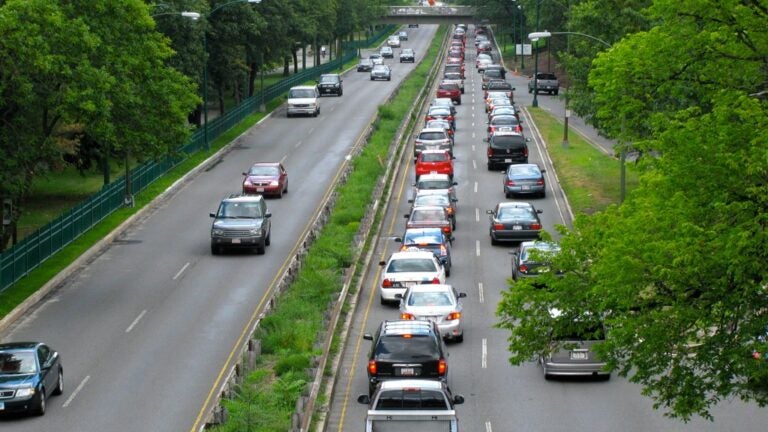
You’ve all been there: Crawling through rush hour traffic, surrounded by cars on all sides, when – suddenly – you’re not!
You didn’t pass a roadside accident or navigate a congested merging lane, but for no reason at all you’re now clear to floor it.
And you’re thinking, what was the deal with that traffic jam, anyway?
Turns out it took a group of Japanese physicists to demonstrate the answer.
This video from a 2008 study published in the New Journal of Physics shows how traffic jams can spontaneously appear and spread on roads near the limit of their carrying capacity.
[fragment number=0]
Researchers from a number of Japanese universities put 22 cars on a circular track and told the drivers to maintain a constant speed.
They did for a while, until human error led to tiny differences in speed that caused some drivers to get slightly closer to the cars in front of them. It was all downhill from there.
To quote the scientists, “It takes a period of time for the fluctuations to grow enough to break down the free flow. The free flow has been disturbed and the vehicles cannot move homogeneously any more.’’
Basically, drivers start to hit the brakes and before you know it, a traffic jam has appeared. You can actually see the jam travel around the circle in the opposite direction of the cars.
As one car gets stuck behind the cluster of stopped vehicles, another escapes out the front – with the driver probably thinking, what was the deal with that traffic jam, anyway?




To comment, please create a screen name in your profile
To comment, please verify your email address
Conversation
This discussion has ended. Please join elsewhere on Boston.com