
Workers Without Cars Still Drive to Work
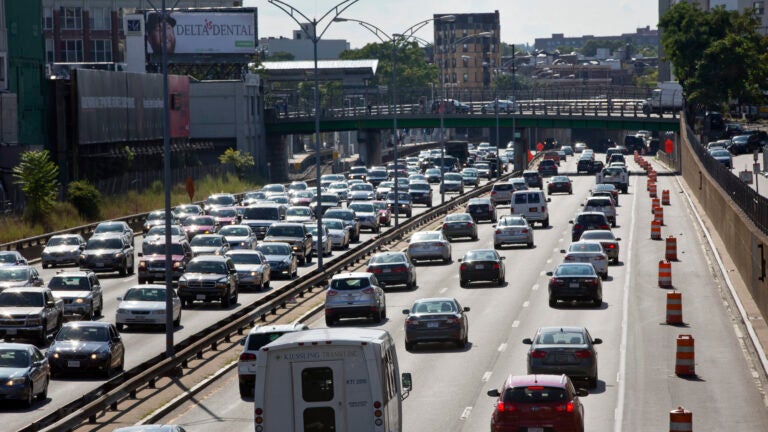
About 6.3 million US workers don’t own a private vehicle, but that isn’t stopping them from driving to work, according to the Brookings Institution.
The think tank’s report identifies inadequate public transportation as to why employees who don’t own cars still need a set of wheels to get to work.
Our work has found that nearly all zero-vehicle households live in neighborhoods with transit service, but those routes only connect them to 40 percent of jobs within 90 minutes…. Little wonder then that many car-less commuters find a vehicle to get to work.
Looking at the most recent Census data, Brookings found that the rate of private vehicle ownership dropped slightly from 2007 to 2013. But at the same time, it found 20 percent of workers drive to work alone by borrowing a car while another 12 percent carpool.
The think tank’s data paints a particularly troubling picture when it looks at commuting habits in major cities: More than half of “zero-vehicle workers’’ still find a car and drive to work in large cities like Dallas and Detroit.
Massachusetts Institute of Technology’s “You Are Here’’ project seems to back up Brookings’ findings. Based in MIT’s Media Lab, the project produces a new map of transportation options every day for 100 cities.
According to the project’s map of Cambridge, public transportation seems to fall short for most of the city. Pretty surprising, considering Cambridge has five red line stops, two green line stops, and plenty of bus routes.
On the Cambridge map, only one origin location near Harvard Square appears to be well-served by public transportation with a 24.3 percent accessibility rate. Move the starting point around the map and public transportation becomes a less attractive option.
From the Harvard Square starting point, the map reveals nearly 34 percent of Cambridge is accessible by car and over 40 percent can be reached by bike. Overall, traveling by bike seems to be the most successful way to get around Cambridge.
With the car being the most attractive commuter option, Brookings worries that more households will choose to take on the financial burden of owning a car in order get around. In order to fix public transportation shortcomings, the group recommends policymakers to focus more on access than on mobility.
Several local communities appear to be taking steps to address public transportation’s shortcomings. BostInno reports that Cambridge recently granted a six-month license to Bridj, a pop-up bus service, to operate in the city. Bridj says it “[crunches] millions of data points to see where people live and work.’’ The company then uses that data to build a smarter commuting plan based on customer needs instead of fixed routes.
Bridj fares range from $5 to $8, which is more expensive than MBTA rides. But the company promises more comfortable seats, fewer stops, and free Wi-Fi. In addition to Cambridge, Boston and Brookline have also granted Bridj a license to operate in their communities.
And of course, there’s always Uber. But let’s not get started on that.



To comment, please create a screen name in your profile
To comment, please verify your email address
Conversation
This discussion has ended. Please join elsewhere on Boston.com