
Boston in 2032: No Cars, Less Stuff, and Robots Rule the Night
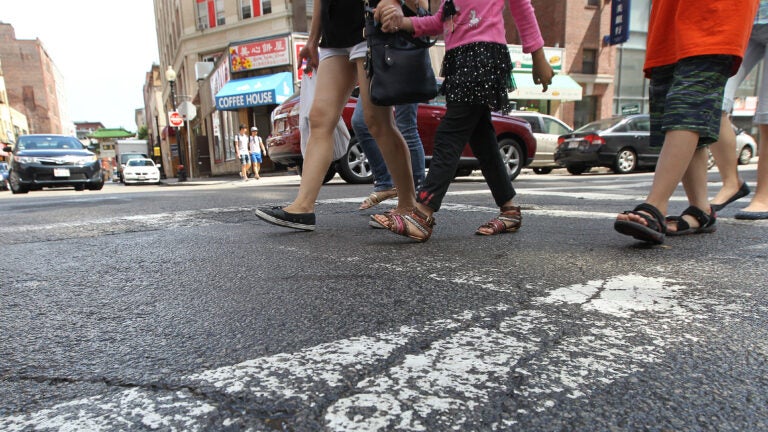
Imagine a Boston where the longtime struggle between motorists and pedestrians has finally been resolved, the city has a greater population than ever, and an army of robots emerges from the shadows every night.
Sounds crazy, right? Well, maybe not that crazy according to a recent futurist paper from New York University. The paper, “Re-Programming Mobility,’’ was produced by NYU’s Rudin Center for Transportation which researches and studies transportation and technology trends. The paper offers some pretty interesting, if not hokey, ideas of what Boston could look like by 2032.
Here’s how it pans out. The study predicts that Boston’s population will be so strongly impacted by student debt that “few young people actually [own] anything.’’
As a result, a “peer economy’’ takes root. With this sharing economy, coupled with advances in mobile technology and digital media that can address most needs, young people have little reason to own their own stuff.
With fewer durable goods and more reliance on peer-to-peer ownership, the micro-unit becomes the housing unit of choice for most young people. According to the NYU paper, these units can range from 135 to 160 square feet and come with multi-purpose furniture and programmable screens on the walls and even floors.
The rise of micro-units means more people will live in the city and walking becomes the preferred method of getting around. More walking means fewer cars, and by 2034, Boston will phase out all automobiles and reclaim structures and street space once reserved for cars.
In this proposed world, more people will ride their bikes, and the T trains are programmed to run autonomously. By 2032, the study predicts self-running taxis will be the only vehicles running in Boston.
If you didn’t think so by now, here’s where it really gets weird.
Eventually, the “sharing economy’’ starts to loosen its grip and residents want to their own private things again, presenting a problem for delivery companies like UPS and FedEx that have trouble moving through the city’s narrower, pedestrian-dominated streets. The solution? Robotic couriers, even drones, deliver items during the early morning hours.
From the “Re-Programming Mobility’’ study:
“Since neither system required visible light to function, they began shutting off the city’s street lighting in the absence of people. Boston had become two different cities, one inhabited by people, the other by robots, rarely coming into contact.’’
In addition to Boston, the study also looks at how Atlanta, Los Angeles, and the state of New Jersey could change over the next few decades. In the other urban areas, the paper imagines ways to accommodate traditional vehicles, but the Boston scenario works to phase cars out.
Believe it or not, some of these proposals are not as crazy as you think. Boston housing experts have touted micro housing as a way to reduce rents and attract more young people. The city of Hamburg, Germany has already announced plans to make part of its city car-free. Signs of a peer economy, like Uber, Hubway, Lyft, and Airbnb are gaining popularity. And major companies like Amazon and Google, both referenced in the paper, are pushing to make use of drones.
Maybe the future isn’t as far away as we think.




To comment, please create a screen name in your profile
To comment, please verify your email address
Conversation
This discussion has ended. Please join elsewhere on Boston.com