
New device aims to stop teens texting and driving
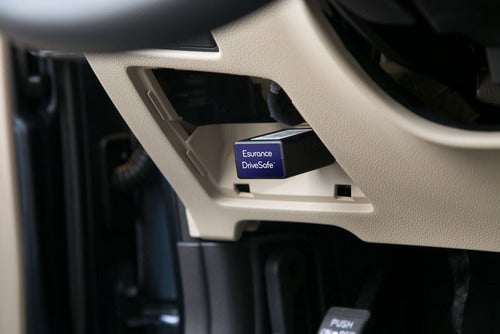
The National Highway Traffic Safety Administration says teens are six times more likely to crash while dialing a cellphone and 23 times more likely to crash while texting. Reaction times become similar to those of a 70-year-old who drives without a cellphone. Parents have a new tool to fight this, but it works best for teens with Android—not Apple—smartphones.
The insurance company, Esurance, has introduced a new program called DriveSafe that monitors teens’ driving habits. DriveSafe includes a telematics device that installs into the onboard diagnostics port on any vehicle built after 1996, except hybrid and electric vehicles. Parents then download the DriveSafe app on their teens’ smartphones, and the app can track driving habits via Bluetooth and lock out certain functions while the car is moving.
It also can alert parents to risky habits like accelerating too quickly, braking hard, driving past curfew, driving too far from home, or speeding. And talk about speeding: Esurance’s online overview depicts an alert that one teen reached 79 mph in a 25 mph zone of San Francisco’s Arguello Boulevard. (He’s so grounded.)
You’d think such alerts would raise insurance rates, but Esurance promises the data will not affect anything. In fact, the company claims it never sees the data; a third party hosts the information collected, which “will never be shared with Esurance.’’
Parents can block certain smartphone functions while the car is moving, such as use of social media apps, text messaging, email, or web browsing, but still allow teens to receive calls from Mom and Dad, dial 911, or access Bluetooth hands-free functions.
If teens remove the DriveSafe app, turn off Bluetooth, power down their phones, or otherwise block access to the app, parents will get a notification, according to Esurance spokesman Danny Miller. He expects Esurance to finalize agreements with Pennsylvania and Massachusetts to offer the program “sometime in the first half of 2014.’’
DriveSafe works with Android smartphones, as well as some Windows and BlackBerry devices. It works with iPhones, too, but the devices “do not support restriction of phone functionality,’’ so all that happens is teens see a home-screen message to avoid using their cellphones while they drive. We suspect that’s little deterrent when Becky texts all those details of her date with Jordan last night.
Miller insisted that Apple doesn’t allow any app to block texts: “No third party application can block iPhone functionality,’’ he said. “That’s not an issue that’s particular to us; that’s across the board. You won’t have any sort of similar offering that will prevent folks from using their iPhone.’’
Auto Exports’ Rise Continues
We’ve known that US automotive exports are increasing, but now the Detroit News expects that, when the 2013 numbers are tallied, auto exports will have reached 2 million cars and trucks, up from around 1.8 million in 2012. Most will come from GM, Ford, and Chrysler, the News reported.
Mexico and Canada account for the lion’s share—49 percent—of US auto exports these days, but that’s down from 80 percent in 2004, according to the Detroit News. Taking their place are a lot of overseas countries. US-built cars shipped to China are nearly six times their 2009 levels, and the Middle East, Africa, and South America could get larger chunks down the road.
But that could all be temporary, as automakers increasingly invest in plants across local markets that allow them to build cars in the regions where shoppers buy them, whether it’s Tennessee or Thailand.
US auto imports still eclipse exports by a long shot; the trade deficit tops $100 billion. But the margin is shrinking.





To comment, please create a screen name in your profile
To comment, please verify your email address
Conversation
This discussion has ended. Please join elsewhere on Boston.com