
Mass vs. Efficiency In Automotive Design Is MIT Panel’s Topic
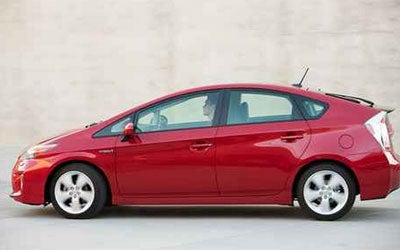
There’s a price to be paid for achieving significant increases in fuel economy. Sadly, the more fuel we want to save, the more we’re going to pay for vehicles that can return greater miles-per-gallon numbers.
We’re already seeing this reality at work in the way fuel-efficient hybrids command a premium over the same model powered by an internal combustion engine.
Right now, the industry is itemizing what it’s going to take to meet the federally mandated Corporate Average Fuel Economy (CAFE) standards of 35.5 miles per gallon by 2016 and 54.5 mpg by 2025.
How are we going to get there?
“Hitting the Automotive Sweet Spot: Mass vs. Efficiency’’ will be the topic this Thursday, May 9, at MIT when the New England Motor Press Association (NEMPA) and the Massachusetts Institute of Technology conduct the third in their annual series of symposia examining leading-edge automotive issues.
On the road to improved efficiency, we’re already seeing sophisticated chassis engineering, improved aerodynamics, a variety of microprocessor-controlled fuel-delivery systems, and electrification.
However, coming steps to meet the CAFE standards are going to involve substantial reductions in vehicle weight.
This move to put cars on a diet means, in part, moving away from steel to materials such as aluminum, carbon fiber, and plastics. They’re light and strong but expensive to buy, use, and repair.
Lighter weight also will have byproducts:
1.Vehicle performance. Engines (gas and electric) can be smaller.
2.Vehicle safety. Will airbags replace crumple zones?
3. Clean air. Lower emissions should be byproduct.
4. Reparability. How will these vehicles be fixed?
5. Recycling. Will new materials be more or less recyclable?
6. Affordability. Will consumers be able to own such vehicles or will another financing model need to be developed. Various estimates are that new materials will add between $2,000-$5,000 to vehicle prices.
NEMPA’s Craig Fitzgerald, the editorial director of IMN, which develops editorial content for approximately 1,800 automotive dealer newsletters, will moderate the international panel at MIT’s Faculty Club.
Panelists include:
Mike Stanton, president and CEO of Global Automakers. He represents member companies (Aston Martin, Ferrari, Honda, Hyundai, Isuzu, Kia, Maserati, McLaren, Nissan, Peugeot, Subaru, Suzuki, and Toyota) in Washington on matters of energy conservation, trade policy, and the global marketplace.
Heiko Schmidt, Mercedes-Benz department manager for compact cars. He oversees M-B’s strategic and operational planning for future product, including the coming CLA (launching this fall) and B-Class Electric Drive (launching in early 2014).
Dave Leone, executive chief engineer for GM Global Performance Luxury Cars. He was the team leader for the 2013 Cadillac ATS, which was voted North American Car of the Year, the 2014 Cadillac CTS, the Chevrolet Camaro Z/28, and Chevrolet SS.
Anders Tylman-Mikiewicz, general manager of the Volvo Monitoring & Concept Center. The center is a strategic think tank in California that creates, cultivates, and realizes innovative concepts.
Another Viewpoint
There’s another approach to the mass vs. efficiency equation, one brought up by retired General Motors vice chairman Robert Lutz:
He suggests increasing the federal gasoline tax.“If you want people to use less of a given commodity, you raise the price of that commodity. It’s that simple,’’Lutz told the Chicago Tribune. He suggested a 25-cent-per-gallon annual increase in federal gas taxes, until pump prices reach $6 to $7.
Making large vehicles more efficient only encourages consumers to keep buying them, says Lutz. Higher gas taxes, such as those in Europe, where gas is $7 or $8 per gallon, mean only the rich can afford large vehicles.
In addition to steering consumers toward more efficient vehicles,Lutz said higher taxes would generate billions for repairing crumbling roads and bridges.“It’s not as if we don’t need more money for that,’’ he said.
Etc.
Toyota announced last month that it has sold more than five million hybrids worldwide. As of April 16, it had sold 1,951,243 in the United States. The company estimates that its hybrids have saved their owners more than three billion gallons of gasoline.
The Chevrolet Cruze turbo diesel will get an EPA-estimated 46 mpg on the highway when it begins a limited launch this spring before a nationwide rollout in the fall.
AAA says we’re at the tipping point where consumers change driving and spending habits because of gas prices.“Most people have resigned themselves to paying higher gas prices and are cutting back on driving, shopping, and dining out to save money,’’ says Robert Darbelnet, president and CEO of AAA.
Need a break from fuel economy talk? Next weekend brings the 24 Hours of LeMons to New Hampshire International Speedway with racing both days. It’s restricted to cars that were purchased, fixed up, and prepped for $500 or less, excluding safety equipment. Checking the rules and FAQs makes a visit to the website—24hoursoflemons.com—worth the clicks. The event is open to the public.







To comment, please create a screen name in your profile
To comment, please verify your email address
Conversation
This discussion has ended. Please join elsewhere on Boston.com