
Toyota and MIT partner to create smarter cars that still leave the driver in charge
The five-year project would develop “intelligent’’ rather than self-driving cars
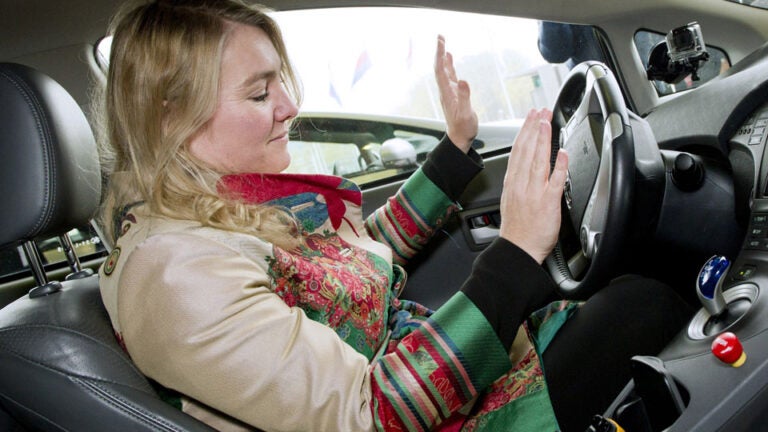
“We think people love driving,’’ Daniela Rus, professor of electrical engineering and computer science at Massachusetts Institute of Technology told Boston.com. Rus leads MIT’s artificial intelligence laboratory, and is now the principal force in the university’s recent partnership with Toyota to create “intelligent’’ rather than self-driving cars.
While much recent media has focused on Google and well-known automakers developing autonomous cars, capable of sensing their environment and navigating without human input, Toyota (and Rus), aim to keep humans in control with their smarter cars. Rus explained that these cars would have “parallel’’ autonomy, which means the machine watches what drivers do, rather than “serial’’ autonomy, which means the car replaces the driver entirely.
“Toyota is interested in making cars safe,’’ Rus said. “Creating a system not capable of entering into collisions. We still expect people to enjoy driving and enjoy their car, but their car will be safe. It will constantly keep track of what the human is doing.’’
Story continues after gallery.
New and improved cars for 2016:
[bdc-gallery id=”1424836″]
MIT isn’t the only school with a computer science and artificial intelligence laboratory involved in the $50 million venture. Toyota is also collaborating with Stanford University’s A.I. lab in the effort.
There’s plenty of driver assistance technology already available for the project to build on, Rus said. Many automakers routinely include systems for pedestrian and bicycle detection and for keeping vehicles in their own lane. The Toyota program would focus on more than just alerting the driver, however. The smart cars would actively correct errors.
MIT’s lab is well equipped to undertake the research. Rus pointed out MIT has been building self-driving golf carts in Singapore since 2010. In a recent experiment, MIT ferried tourists there around a public garden without any hiccups.
“You can book a car and walk to a pick up point, and expect the car to be there and take you to a destination,’’ Rus said, adding that the car-sharing system is much more efficient than waiting for a bus. “Once you get out, the car figures out where it needs to go and goes there.’’
While experiments like this show self-driving technology can be used effectively, Rus said the “self-driving problem’’ has yet to be cracked. Currently, it only works in highly controlled areas.
“We’ve demonstrated self-driving at low speeds in low complexity environments,’’ Rus said, adding that this does not take into account inclement weather, high-speed driving, or heavy congestion. “The problem is simply not solved.’’ More research needs to be done to before cars can make difficult decisions in harsher conditions.
She’s not making predictions about when the Toyota intelligent car will be completed, but Rus said the current partnership lasts five years.
“I have a very special relationship with my car and I enjoy that, but there are times when I would appreciate not having to pay attention to the road,’’ Rus said.
Who wouldn’t?





To comment, please create a screen name in your profile
To comment, please verify your email address
Conversation
This discussion has ended. Please join elsewhere on Boston.com