
MIT dropout wants to turn your normal car driverless
His startup Cruise Automation sells conversion systems for some conventional cars.
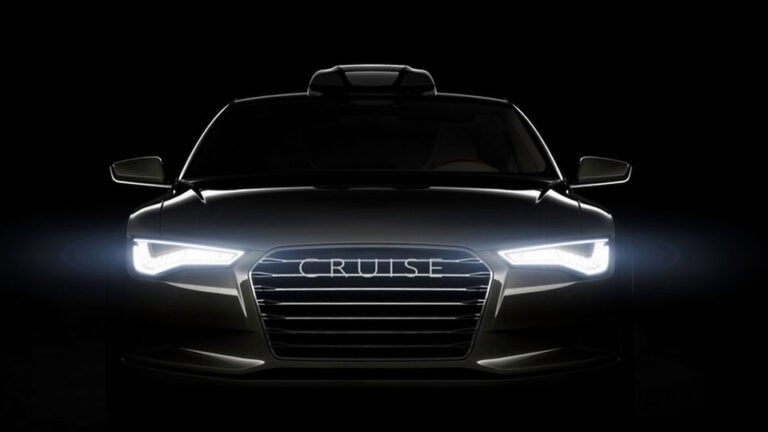
Soon you might be able to drive an autonomous car without buying a new vehicle, thanks to an MIT dropout.
Kyle Vogt is the CEO and founder of Cruise Automation, a company building driving automation technology. His first venture? RP-1, a conversion system that promises to turn some conventional cars into driverless ones for $10,000.
Sounds pricey, but the system comes with a sensor pod equipped with cameras and radar that sits on the car’s roof, monitoring lane markers and other cars around you, and a driver’s side control that allows you to engage or disengage the system with the push of a button. The brains of the operation are the computer located in the trunk that uses algorithms to control the whole system. Installation is also included.
When you consider that buying a car equipped with driverless technology in 2025 is expected to add an extra $7,000 to $10,000 to a car’s sticker price, RP-1 seems like a pretty good deal.
[fragment number=0]
We think you’ll like: Our review of the long-awaited redesign of the Volvo XC90. To read, click here.
The Wall Street Journal describes the technology as “somewhere between the self-driving Google car and bare-bones cruise control,’’ falling into the emerging field of advanced driver assistance systems (ADAS).
Unfortunately, you can’t buy one right now because they already sold out. Cruise is no longer taking pre-orders for their first 2015 units, to be shipped some time later this year. You can join a waitlist though.
There are other considerations as well. Currently, the RP-1 system only works with “any 2012 or newer Audi A4 or S4’’ and is legal only for daytime highway testing in California, putting it alongside driverless cars from Google, Tesla, and Mercedes.
Obviously the company hopes to expand the use of the technology to other city roads, but when this will happen is up in the air. “While many states are still drafting regulations for driver assistance systems and autonomous vehicles, we will be in compliance with any necessary regulations by the time the RP-1 ships,’’ Cruise said.
Massachusetts currently has a bill on the table that would allow autonomous vehicle manufacturers to test driverless cars on public roads, but there’s still little talk about when driverless vehicles could be publically operated. Boston.com reached out to The Massachusetts Department of Transportation, but they could not be immediately reached for comment.
Story continues after gallery.
The safest cars of 2015, according to IIHS:
[bdc-gallery id=”1428162″]
In terms of safety, Cruise seems pretty straightforward about acknowledging some of the unknowable factors of driverless car technology: “While we conduct our own safety testing, closed course track testing, and endurance testing, we know that even that may not be enough,’’ they said, so Cruise is working with an independent third party contractor to conduct further safety tests.
Safety has been one of the hot button issues surrounding driverless cars, especially after Google acknowledged that 11 of their driverless cars were involved in accidents since their testing program began in September 2014.
Don’t be scared off by Vogt’s “dropout’’ status. He knows his stuff, WSJ said. At MIT, he worked on the DARPA Grand Challenge, where teams build autonomous vehicles and race them through a desert.
To see a breakdown of the 20 most popular cars for sale near Boston, click here.



To comment, please create a screen name in your profile
To comment, please verify your email address
Conversation
This discussion has ended. Please join elsewhere on Boston.com