
Sign up for the Today newsletter
Get everything you need to know to start your day, delivered right to your inbox every morning.
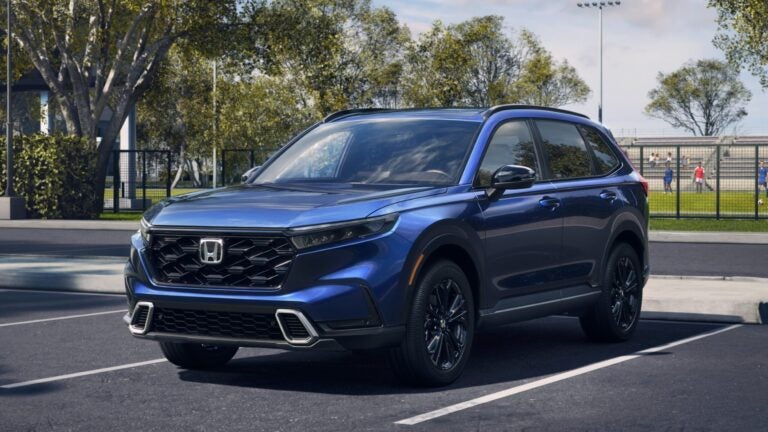
Q. My son just picked up his new leased 2026 Honda CR-V Sport, and while parked someone hit the driver side rearview mirror just enough to knock a small two-inch chunk off the edge. I checked to see if I could get a replacement part, but it would require taking the mirror off the door. This looks like an expensive job at the dealer and too difficult for a DIY’er. Will leaving the wound open mess up the electronics in the mirror? Can I make my own mold of the missing piece and epoxy on my home-made replacement and paint it? Or should I just ignore the wound and forget about it?
A. Concerning the electronics in the mirror, they are quite robust and the weather will not affect the operation. Could you mold or 3-D print a replacement part and epoxy it in place? It is certainly possible. You can buy color matching factory paint through automotivetouchup.com. Also something to think about, with a lease you are going to be responsible for damage that is not considered normal wear and tear. My last new car was damaged in a parking lot when it had about 1,000 miles on it. The damage was about $1,000, and since the car was new, I had it repaired. It just felt like it was the right thing to do with a new car. If it were older I would have probably made some DIY repair and moved on.
Q. I have two Toyota vehicles, a 2015 Toyota Tacoma and a 2020 Prius Prime. When I use iPhone Maps in the Tacoma, both visual and audio work fine. Audio comes through the phone. When I do the same thing in the Prius, the audio portion does not work. Any ideas? All settings are the same, as far as I can tell.
A. Once you have determined that the IOS of the phone is up to date as well as any software for cars, the next step is that the audio source is set wrong. Select CarPlay, USB, and Bluetooth. Some Toyota products have separate volume levels for radio and phone audio; one could be set to mute. Depending on how you connect the phone, sometimes Bluetooth and USB conflict with each other. Then sometimes it is just a matter of one technology not being compatible with another.
Q. I recently experienced my car cutting off while driving, I was able to restart my car and drive for about four miles then I noticed my engine was overheating. I checked fluid which was normal; oil was normal even though I was told I had a slow engine gasket oil leak. What could be the problem?
A. If the engine was overheating before you noticed the gauge warning, that certainly could have caused the engine to stall. The overheating could be caused by a faulty thermostat, cooling fan, clogged radiator, or a cylinder head gasket. A good shop should be able to check these items and also determine if there is permanent damage to the engine.
Q. I am reaching out about an issue with my 2019 Honda Pilot. We got a new battery and then a couple of days later took it in for state inspection. It did not pass the emissions test because it was “not ready.” The mechanic said this happens with new batteries and suggested that I drive it for a few days. For the past two to three weeks we have been driving it a lot (over 500 miles) and doing the cycle resets suggested online. Still coming up “not ready” when tested at home with an OBD scanner. Is it weather related or something else?
A. All cars have emissions monitors that need to run to pass mandated emissions inspection. In all the states I am familiar with you can have one monitor “not ready.” The most common is the EVAP monitor. This system only self-tests when the fuel tank is between one quarter and three quarters full. Weather can also affect this test. If you are just checking the car with a code reader, it may be coming up not ready due to one monitor not being ready. Also your comment about cycle resets, if you are clearing codes each time you check the car, you are starting the process all over again.
Q. I think I have a small head gasket leak on my 2005 Toyota Corolla. The engine is losing about one quart of coolant every six or seven weeks. I have never had a head gasket leak before, but then I have never kept a car for over 20 years. If I put a low-pressure radiator cap on, will that reduce the leak? I would like to get another year or two out of the car without spending a fortune on repairs.
A. If the leak were a water pump or radiator, the low-pressure cap would limit system pressure and hide a leak. If it is a head gasket the pressure is coming from combustion gases and the coolant is being ingested during combustion. The first thing I would do is a pressure test of the cooling system. If there are no visible leaks, then check for a head gasket leak. There are “block-check” kits that you can buy or even rent that measure combustion gases in the cooling system. If it is determined there is an internal leak you could try Blue Devil or K-Seal head gasket sealer. I have had decent luck with both. These chemicals are simple to use, just pour the chemical in and let the engine idle for about an hour and hope for the best.
John Paul is AAA Northeast’s Car Doctor. He has over 40 years of experience in the automotive business and is an ASE-certified master technician. E-mail your Car Doctor question to [email protected]. Listen to the Car Doctor Podcast on Apple Podcasts or other popular podcast sites.
Get everything you need to know to start your day, delivered right to your inbox every morning.




Be civil. Be kind.
Read our full community guidelines.To comment, please create a screen name in your profile
To comment, please verify your email address