
Sign up for the Today newsletter
Get everything you need to know to start your day, delivered right to your inbox every morning.
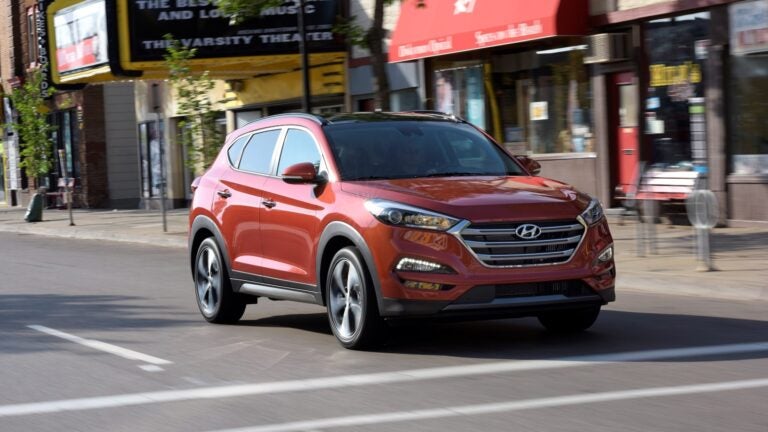
Q. I have a 2018 Hyundai Tucson with 60,000 miles and was driving on the highway going the speed limit when all of a sudden I gradually lost power with my engine light blinking. Fortunately I was able to pull over to the side of the highway. I had my vehicle towed to the Hyundai dealership and had my engine totally replaced, thanks to the 100,000-mile warranty. There was no cost to me – that was the good point. The bad and scary point is that I could have been hurt or even killed under the circumstances. My question is whether this is a common or not so common occurrence with this particular vehicle. By the way, I love your column, I look for it every week.
A. This problem is more common than you would think. In many Hyundai/Kia models the bearings were not machined correctly, and a combination of things happen – engine knock, check engine light, the engine loses power, and sometimes a connecting rod goes through the engine block. Toyota and Chevrolet are also having a similar issue. Toyota is recalling hundreds of thousands of Tundra/Lexus vehicles due to debris causing bearing failure. General Motors is recalling trucks/SUVs for potential engine failure related to manufacturing defects. So this is not just Hyundai and Kia’s issue. Typically, what happens is the check engine light comes on because a sensor detects knocking, and the engine goes into limp mode (reduced power) and you can get safely off the road.
Q. I need to know if I can upgrade the battery in my 1999 Ford Mustang GT. The car uses a group 59 battery. I want to replace it with an AGM (Absorbed Glass Mat) Yellow Top battery. Do you know which equivalent one I can replace it with?
A. Yes, you can, but not without modifying the car and battery placement. The group 59 conventional battery is the only option for an exact replacement. Optima (the battery I believe you are researching) does not list a Yellow or Red top battery for your car. Even here at AAA we don’t show an AGM battery, just conventional flooded lead acid batteries.
Q. Now that we’ve been experiencing some of the coldest weather I can remember, I’ve been using the heat more frequently in my 2019 Toyota Highlander Hybrid. The seat warmer and steering wheel heater were, in the past, all I needed to be warm. Now that my wife is sometimes with me in the car, she requests heat. I do set the temperature pretty high, but it seems to take forever to get warm air flowing from the vents. Is that due to the car heater needing hot water from the engine and the engine is not on all the time? I don’t think the heat source is electrical. Is there any way to get heat into the cabin more quickly?
A. Some hybrids will use a combination of a ceramic electric heater and engine heat. Although in 2019 the electric heat seemed to be an option. Unless there was an upgrade, the heater in your Highlander is pretty conventional. The 2019 Highlander Hybrid uses a traditional coolant-based heater combined with technology which runs the engine automatically to generate heat when needed. To maintain cabin warmth in cold weather or EV mode, the gasoline engine cycles on and off, utilizing engine coolant heat. To see if your vehicle uses auxiliary heat, look in the fuse box for a fuse and relay labeled PTC (Positive Temperature Coefficient).
Q. My husband and I are having a disagreement about gasoline. Is there a difference (as he claims) between Top Tier and the lower-tier as he calls them. I feel all brands are the same and I will stop at any station to fill the tank. So who will you side with?
A. Yes there is a difference between Top Tier fuel and non-Top Tier fuel. Top Tier gas (which is all grades 87 octane on up) has more additives which keep the engine combustion chambers clean and free of carbon build up. Top Tier fuel has a cleaning effect, so even if you did not use it all the time, it has a benefit. As an example near me there are no Top Tier stations, so I use what is available, but once a month or so I make a trip to fill up with Top Tier fuel. So in this case, it looks like I am siding with your husband.
Q. I am a car geek but only in that I love all things powered by motors (just witnessing and reading about them, as in your column, not building or maintaining them). I am leasing a 2024 Alfa Romeo Tonale Veloce hybrid. This is my first luxury car ever and I love it. I see that it has very small, hardly discernible orange spots all over the body, only visible because the car is white. I buffed them out until they were gone but, a few weeks, maybe months, later, they were back again. The dealership’s service center guy said that they are from brake dust coming from other cars on the road and recommended Iron-X and/or a clay bar, but that the spots cannot be removed permanently. Any thoughts on this?
A. I’m not sure how the Alfa Tonale is transported, but it sounds like rail dust. Rail dust is essentially hot metal dust from train wheels which appears as tiny rust-colored, iron-based spots on the paint from rail transport. These particles can be embedded in the clear coat, especially on white or light-colored cars. Detail shops will usually use Iron X or Sonax Iron and Fallout Remover. The idea that it is brake dust from other cars sounds improbable, at least to me.
John Paul is AAA Northeast’s Car Doctor. He has over 40 years of experience in the automotive business and is an ASE-certified master technician. E-mail your Car Doctor question to [email protected]. Listen to the Car Doctor podcast at johnfpaul.podbean.com.
Get everything you need to know to start your day, delivered right to your inbox every morning.




To comment, please create a screen name in your profile
To comment, please verify your email address
Conversation
This discussion has ended. Please join elsewhere on Boston.com