
Sign up for the Today newsletter
Get everything you need to know to start your day, delivered right to your inbox every morning.
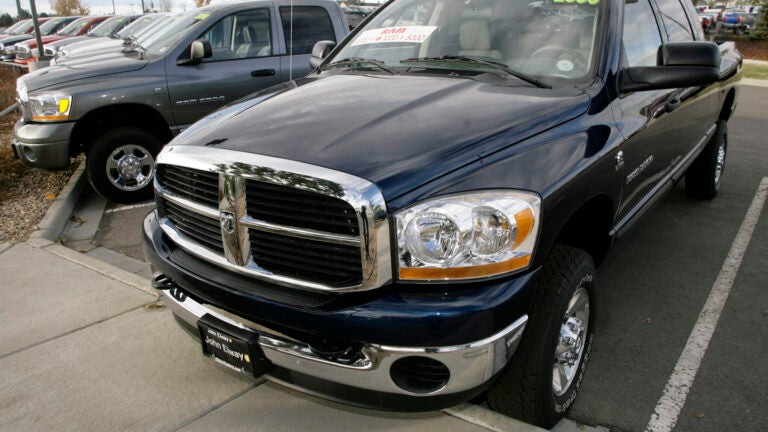
Q. My 2007 Dodge Ram pickup with the 5.7-liter hemi engine had the check engine light come on, then a lightning bolt lit up on the dash. My truck lacks power. The last time I drove it was for about two blocks, the power was low, and I was able to coast home with minimal power and park the truck. It seems that as it warms up, the truck cuts out. What do you think is wrong?
A. The lightning bolt indicates a problem with the electronic throttle body. The check engine light could be a code for the throttle body or something else. At this point I would start with a visual inspection of the wiring to the throttle body and then scan the computer to read codes but also read live data to see what is going on. At 18 years old it would not be unusual to see a wiring issue caused by rust and corrosion.
Q. As I walk through parking lots, I see many cars with hazy headlights. When lights were sealed beams, we never had that problem. Why can’t manufacturers produce a way to prevent this? Perhaps even a peel-off film that would protect the lens and prevent expensive replacement.
A. Cleaning the headlight lenses can help and applying a coat of wax will also slow the headlight lens aging process. One manufacturer; Nissan, on their newest vehicle applies a transparent chemical compound on the headlight lens. The coating goes through a drying and curing process and hardens onto the surface. This coating helps prevent UV rays from degrading the polycarbonate lenses and also makes them more resistant to minor scratching.
Q. I recently bought a 2025 Chevy Trax. When I purchased it, I was told after I signed the paperwork it has a three-cylinder engine. Surprisingly, it has great pickup, maybe because it is a turbo engine. My question is, how do you feel about three-cylinder cars? My other question is the engine shuts down when stopping at a light and turns on when I move. Is this hurting the starter and engine? There is a button to turn the auto start off. How do you feel about this feature?
A. The start-stop feature is designed to save fuel and reduce emissions when idling. Tests show there is a measurable but minimal fuel saving. In theory the battery and starter motor are designed to manage the extra wear and tear. Although I am in favor of reducing emissions and better fuel efficiency, I find the system a bit annoying and tend to shut it off, since it reminds me of a car that stalls. In my case this may be a generational issue. Younger drivers who only know these systems, likely let the engine shut off and restart. As for your Trax three-cylinder engine, as you pointed out, the performance is quite good. You don’t need 500 horsepower – in fact, you only need about 15 horsepower to maintain highway speeds. The wear and tear come from hard acceleration. With proper maintenance and reasonable driving habits I would expect the engine to last 150-200,000 miles.
Q. We were recently involved in a motor vehicle accident that may result in the total loss of our very dependable 2010 Honda CR-V. Can you recommend a small to mid-size SUV with good longevity? We are considering looking at the Honda HR-V, but wanted to know your thoughts on the Hyundai Santa Fe, Hyundai Tucson, Kia Sportage, and Jeep Compass. There are so many newer models now. We are hoping to find something used with decent mileage for under $20,000.
A. The Honda HR-V is a good choice since it will feel familiar and somewhat similar to your CR-V. The Kia Sportage and Hyundai Tucson are pretty similar and either would be a good choice. The Hyundai Santa Fe is a bit larger. You might also want to look at the Mazda CX-5. The Jeep Compass would be my last choice, reliability with some Jeep products according to my readers has not been particularly good. A quick check in my area shows many of the models you are interested in that have reasonable mileage are less than five years old and are selling for less than $20,000.
Q. Today’s transmission fluid change on many cars involves only partially draining the fluid and then replacing the fluid, sometimes leaving almost half of the original fluid in the unit. I remember on older cars that there was a drain plug on the torque converter (which holds most of the fluid). Aren’t these fluid changes just mixing new fluid with old fluid? Would the total flush of the fluid be better?
A. There is some evidence that some of the clutch friction in suspension in the old fluid actually helps with smoother shifting. I tend to follow the transmission manufacturers’ recommendation, which is typically a drain and refill. Some shops will do a complete flush, although I have not seen original equipment manufacturers recommend it unless there is a contamination issue with the fluid. Personally, I would only do a fluid flush as a last-ditch effort to try to get a bit more life out of a worn transmission.
John Paul is AAA Northeast’s Car Doctor. He has over 40 years of experience in the automotive business and is an ASE-certified master technician. E-mail your Car Doctor question to [email protected]. Listen to the Car Doctor podcast at johnfpaul.podbean.com.
Get everything you need to know to start your day, delivered right to your inbox every morning.





To comment, please create a screen name in your profile
To comment, please verify your email address
Conversation
This discussion has ended. Please join elsewhere on Boston.com