
Sign up for the Today newsletter
Get everything you need to know to start your day, delivered right to your inbox every morning.
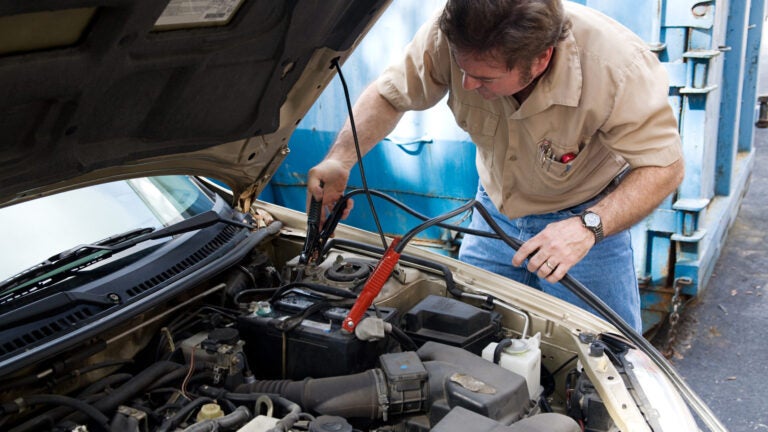
Q. I have a six-year-old Toyota with the original battery. The car has started fine so far this year. I am wondering, should I just replace the battery due to age?
A. The typical life of a battery is five years, so you are, to some extent, on borrowed time. I test my car’s batteries routinely to see how they are doing. I am in a comparable situation with one car and will replace the battery soon. The last test showed it was at 71 percent life. I will replace this six-year-old battery for no other reason than I do not want to hear from my wife that the car didn’t start.
Q. I purchased a Ford Explorer more than 20 years ago, and it was a great vehicle. About 10 years later I purchased the redesigned model and found it was lacking in several areas. I’m now looking at the latest Explorer. What are your thoughts on the newest model?
A. Based on my most recent experience, this latest version may be the best Explorer that Ford has built to date. The optional 400 horsepower turbo-charged V-6 engine is smooth and powerful. The newly redesigned 10-speed transmission shifts smoothly and is nicely matched to the engine. The model I evaluated was the “platinum” trim and it was very luxurious. As a three-row SUV, Ford did an excellent job with this newest Explorer.
Q. I purchased a new battery from the local parts store. Based on one of your columns, I purchased a TopDon battery tester and found this battery, although new, was at only 80 percent life. I asked the parts guy about it and he just shrugged. He suggested that after a month or so of charge cycles it should get over to 90 percent life.
A. Batteries can degrade as soon as they leave the factory. At AAA we test every battery before we install it to make sure it is at 90 percent or better life. The idea that the battery was not “fully baked” yet sounds like an excuse for a less-than-stellar battery.
Q. I was given a Bolens garden tractor that has not run in a long time. I think it was made in Canada and then the company went out of business. I really like the looks of this tractor; it has a manual transmission and differential. It looks like it would be handy around my property. Where do I start to get it running? You once said you answer every question, even lawn tractor questions?
A. Getting an old tractor to start is pretty similar to rescuing any old vehicle. Most of these 1970s vintage tractors used engines still in use today, so parts should be available. Typically, the fuel system is the biggest issue. Drain and clean the fuel tank, replace the fuel filter, and clean out the carburetor. Depending on the condition, you may find the carburetor needs a rebuilding. Drain and replace the oil and spark plug(s). When the spark plug(s) are out, add some light oil to the cylinders. Check that the engine turns over and there is spark. On the first attempt to start the tractor I would use premixed two-stroke fuel. The little bit of oil in the fuel will help lubricate the engine. Once it is running, let it fully warm up and then shut it down. Check the oil and belts and look for loose bolts, brackets, and wire connections. Yes, I do try to answer every email, usually within 24 hours. If you do not hear from me, send a follow up.
Q. I recently purchased a used car and it has an inspection sticker, parking sticker, and car wash sticker on the windshield. It also has a few off-color bumper stickers. How do I get these off?
A. On the windshield use a razor blade scraper, with a new blade. Carefully scrape off the stickers, being careful not to slip and nick the trim. Once the stickers are removed, use a little cleaner such as Goo-Gone to remove the sticky residue then follow up with glass cleaner to clean the entire windshield. On the bumper, use a hair dryer to warm up the bumper stickers then with your fingernail try to lift up the corner of the sticker. Once you have a good grip on the sticker try to pull it back on itself. Using an 180-degree release angle, combined with heat is key to minimizing tearing and reducing leftover residue. Once the stickers are removed clean off any residue and wax the bumper.
John Paul is AAA Northeast’s Car Doctor. He has over 40 years of experience in the automotive business and is an ASE-certified master technician. E-mail your Car Doctor question to [email protected]. Listen to the Car Doctor podcast at johnfpaul.podbean.com.
Get everything you need to know to start your day, delivered right to your inbox every morning.





To comment, please create a screen name in your profile
To comment, please verify your email address
Conversation
This discussion has ended. Please join elsewhere on Boston.com