
Sign up for the Today newsletter
Get everything you need to know to start your day, delivered right to your inbox every morning.
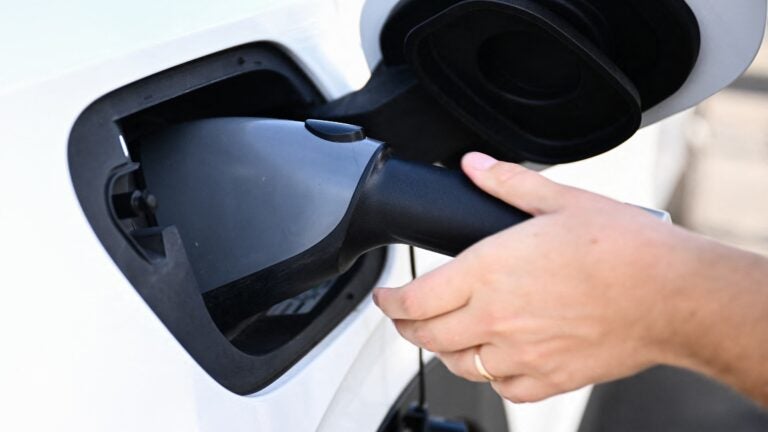
Q. I read your advice columns each week and listen to your podcasts fairly often. You confuse me a bit. One time I am convinced you are a dedicated petrolhead, then you are talking about electric cars and even electric bikes. So, what gives?
A. You found me out. I enjoy gas engines, electric motors, cars with insane horsepower and performance, and cars that get 50 miles per gallon. We live in what I call the golden age of automobiles. We have a choice of gas cars, diesels, electrics, and hybrids, and that, in my mind, is fantastic. Yes, even motorcycles, scooters, and electric bikes interest me. So I guess you can say if it has wheels, I am interested.
Q. I have a 2015 Volkswagen Tiguan that randomly cuts off while driving around in town, but it starts back up immediately. It does not shut off while traveling on the highway. What is wrong?
A. At this point it is impossible to say it is one particular problem. The most likely culprit is a problem with the fuel system. A good technician will perform a visual inspection, looking at major systems as well as possible damaged wiring. The next step would be to scan all the modules in the car to look for possible pending codes. Then check for a fuel issue while underway. Depending on how intermittent the stalling is, time may be the best diagnostic tool. Trying to diagnose a car that is operating normally can lead to guessing and expensive parts swapping.
Q. I have been repairing my own cars for years and have always tried to use factory rather than aftermarket parts. I always felt that the quality was better. I recently replaced a part in my daughter’s Ford Fusion. It was new in the box and did not work. Aftermarket parts have always worried me, now original parts seem almost as bad. What is going on?
A. I recently helped a neighbor with a repair on his Toyota and the factory parts were a perfect fit and worked as designed. Another neighbor was puzzled because he replaced the temperature sensor on his car with a factory part, and the car would not start easily when the car was hot. A quick scan showed that when the engine was hot the sensor was reading 35 degrees. We replaced it with an aftermarket sensor and all was good. When I buy aftermarket parts, especially electronics, I try to buy from the original equipment supplier. I have found the quality is good and the prices are cheaper than the actual factory parts.
Q. My 2014 Ram 1500 SLT is a quad cab with the 5.7L Hemi, 8-sp. A/T with 134,000 miles. There is a message “fuel sensor fail” on dash. There are no readable codes when checking with a scanner. The full tank shows “E” and goes back/forth to “F”, back to “E”. The dash shows “low fuel warning” while on “E”. Can I ignore it due to the cost of repair and the age of the truck? The truck is handy, but at 11 years old I do not want to put $1,000 into it. I thought I would monitor the gas amount via the “Trip A”, “Trip B” on-dash menu. If not replaced, will the engine be harmed?
A. The only possible harm that I can think of is if you are constantly driving low on fuel, which can overheat the fuel pump. The fuel gauge sensor on most Chrysler vehicles is part of the fuel pump module. To fix the issue you would replace the entire module. The cost of the part is about $600, and it will take a couple of hours of labor to replace it. The other possibility is a broken wire or rust causing a poor connection. Although in my experience the issue you described is typical of a faulty pump module.
Q. I have a Toyota Camry. It is about five years old and has 52,000 miles. I asked my mechanic to flush the transmission, and he said it was not a good idea. He said I am better off draining and refilling. What are your thoughts on this?
A. Flushing a transmission and replacing all of the fluid can sometimes cause issues. The other problem I see with transmission flushing is that the shops that do it do not always use the factory fluid. As strange as it sounds the slightly contaminated fluid actually aids in how the car will shift. So replacing some of the fluid during a drain and refill leaves some of the worn clutch material that is suspended on the old oil and can actually prolong the life on the transmission.
John Paul is AAA Northeast’s Car Doctor. He has over 40 years of experience in the automotive business and is an ASE-certified master technician. E-mail your Car Doctor question to [email protected]. Listen to the Car Doctor podcast at johnfpaul.podbean.com.
Get everything you need to know to start your day, delivered right to your inbox every morning.





To comment, please create a screen name in your profile
To comment, please verify your email address
Conversation
This discussion has ended. Please join elsewhere on Boston.com