
Newsletter Signup
Stay up to date on all the latest news from Boston.com
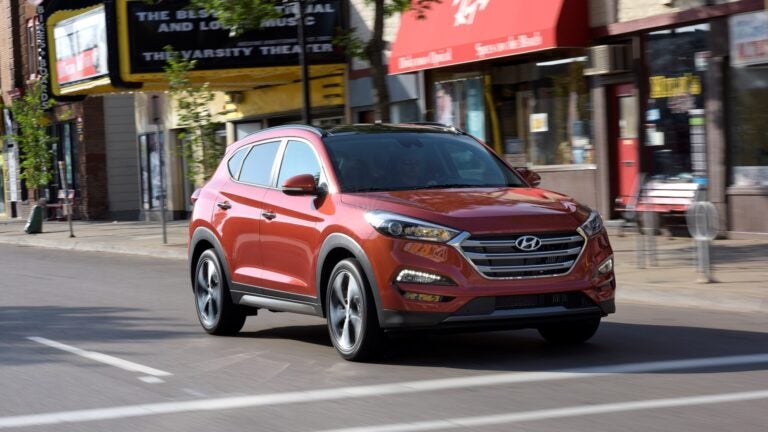
Q. I have a 2017 Hyundai Tucson which I originally leased and then purchased in 2020. It has just under 19,000 miles. I recently brought it to a local Firestone store for an oil change and tire rotation and to have one of the tires checked as the pressure was low. They were not able to find any leaks and brought all the tires up to correct pressure. I was told that since the tires are six years old, I should consider getting new tires as there may be cracks in these tires and that is why the pressure is low. I’ve been driving the vehicle now a few weeks since then and, even with some bitter cold weather and the vehicle not being garaged, the tire pressure is consistently at least 37 PSI Do you really think I need to replace the tires at this time?
A. The cracking is not likely causing the pressure loss but is a sign of aging. Most experts believe that tires should be replaced at 6-10 years. As an example, we have a 2015 Volkswagen. When the car was about six years old the tires were cracking and although the tread was good, I didn’t want an issue and replaced the tires. Additionally, it is normal for a tire to lose about one PSI for every 10 degrees in temperature change and will lose a pound or two per month. At this point I would get a second opinion on the tires and, if badly cracking, replace them.
Q. I heard you talking on your podcast about a Nokian tire for all weather conditions. What makes these so much different that the all-season/all-terrain tires I have on my Ford Explorer now?
A. I think you may be referring to Nokian’s tires called the Remedy. Although I have not tested them, the results I have seen are quite impressive. Unlike standard all-season tires, all-weather tires like the Nokian Remedy feature the three-peak mountain snowflake, which indicates they are government-rated for use in wintery conditions. While all-season tires become less effective in temperatures below 45 degrees, all-weather tires are engineered to remain responsive to the road in cold, snowy conditions.
Q. I recently had a starter replaced on a 2007 Honda Civic LX. The starter works fine, but now I noticed that after starting, the car idles smoothly for a minute and then I feel a slight rough idle. Could this be caused by the starter bolts not being tightened properly? There is no check engine light on.
A. I suspect the problem is that to remove the starter you need to remove the front exhaust pipe. The exhaust pipe has two springs that hold the pipe to the manifold, but also allow for some slight movement when the engine is running. The exhaust pipe may be just tight enough that the normal engine vibration is being transmitted into the car. Over time the exhaust pipe may settle in place and the vibration may subside. I would give it a couple of weeks of normal driving and if you still feel the vibration have the shop reevaluate the car.
Q. I am having a heck of a time with frozen doors and door locks, do you have any suggestions? It is an old car that is locked with a key.
A. Start with using soap and water to clean the rubber gaskets around the door and the mating surface where the doors contact the body of the car. After you completely dry everything, use silicone spray applied directly to the gaskets or sprayed on a cloth and wiped around the door/gaskets. The silicone will help displace any water and prevent freezing. The same spray can be used around the door handles and sprayed into the lock opening. If you are still locked out try all the doors. Never yank on a handle, but push in on the door (light hip check) to crack the frozen seal. Warm water should be a last resort (spray de icer may work) but keep in mind you are adding more water that can refreeze.
Q. On frigid days, how long should I warm up my car? I have a neighbor who warms up her car for 20-30 minutes on really freezing days, is that needed?
A. Today’s cars with fuel injection and multi-viscosity oil require very little warm-up time. My suggestion is to start the car, get settled in, adjust the heater, seatbelt, radio and then drive easily until the car comes up to temperature. Although your neighbor’s engine is fully warmed up the other systems in the car are not. Driving nice and easy in cold weather allows all the systems/components to come up to temperature and improve overall longevity.
Q. When driving with doors locked on my 2021 Toyota Corolla, I can pull the inside handle and the door will unlock and open, same with the front passenger door. The rear doors operate differently. Is this normal or is something wrong?
A. According to the owner’s manual of this vehicle this is perfectly normal and how the locks are designed. The rear doors have child safe locks that can be engaged so that when the doors are unlocked still can only be opened from the outside.
John Paul is AAA Northeast’s Car Doctor. He has over 40 years of experience in the automotive business and is an ASE-certified master technician. E-mail your Car Doctor question to [email protected]. Listen to the Car Doctor podcast at johnfpaul.podbean.com.
Stay up to date on all the latest news from Boston.com




To comment, please create a screen name in your profile
To comment, please verify your email address
Conversation
This discussion has ended. Please join elsewhere on Boston.com