Auto Q&A: Higher altitude calls for lower octane
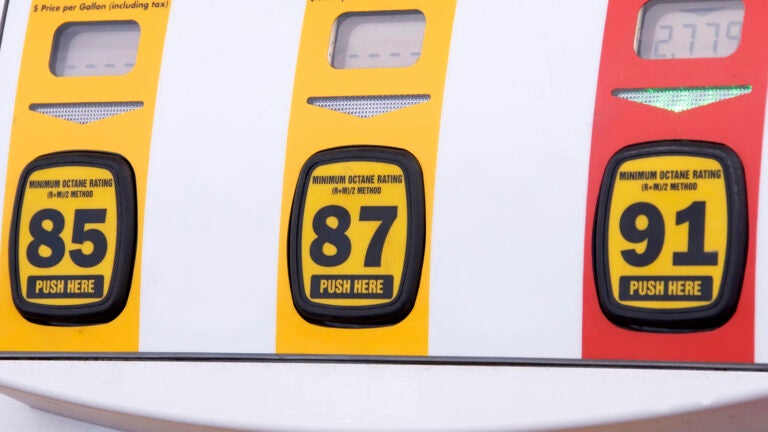
Q: While traveling out West recently, I noticed 85 and 86 octane at some stations. Which vehicles can run on such low octane?— R.N., Manhattan, Ill.A: Nearly all cars can run on a lower octane at high elevations. The lower octane fuel (usually regular grade) is usually 100 percent gasoline, no ethanol. It is popular in the West, especially the high plains where the air is thinner (oxygen content).You may have noticed that, although the octane was lower, the price was higher since ethanol in E10 fuel is federally subsidized. Although the EPA claims that your miles per gallon drop about 3 percent when using E10, most motorists claim the difference is 8 percent to 10 percent. Lower octane, yes, but better fuel economy.
Q: Recently I bought a 2018 Honda Accord with push-button start. You just touch the button and let go and then the engine cranks until it starts. After many cars with conventional key-start, I really like this feature. One thing that I wondered about is what if the engine doesn’t start? How long will it crank until it gives up?
— D.N., California, Pa.
A: When you had to turn the key to start the engine, you were warned not to crank the starter for more than 30 seconds to keep it from overheating. Cranking times are now taken out of your hands and a computer program prevents overheating of the starter motor. In other words, it won’t keep cranking forever, or until the battery dies.
Q: I have a 2013 Prius C. I noticed a few tires losing air, so I took it in to the dealer. I was told it is the valves. One tire valve was changed right away, but the other has the sensor stuck on it. They tried WD-40, and we left it for a few days. Taking it back, they were still unable to separate it. Thus, I was told I have to buy a new sensor which is $250. I told them that I would wait.
My question is, do I really need a new sensor? Is it that important when I manually check tire pressure anyways? I was told that this is a “wear and tear” item, which I have never heard of. I really respect your opinion on this.
— B.B., Chicago
A: Once your car is beyond the original bumper to bumper warranty, anything that breaks is the owner’s responsibility. Your tire pressure monitoring system sensor has seized to the rim. If that is the case, it is almost impossible to remove without breaking. But new sensors are available for much less than $250. Check with an independent shop or tire dealer. If you maintain the tire pressure manually, you can get by without replacing the sensor.
Q: Are retread tires safe? When you drive down the interstate, you see tire remnants all over the road. Who has to pay for removing these pieces. The taxpayers?
— J.H., Chicago
A: Alligators is what truck drivers call those slabs of tread rubber, and they can be just as dangerous as the critter. Steer clear of them and keep your distance from the car ahead lest they hit one and launch it at your car. Retreads are a frugal way to keep trucks rolling vs. new tires that can be expensive.
Because most trucks have dual wheels, they usually won’t stop until they reach a service plaza. The highway department is in charge of clearing the debris, but the ultimate charge is to the public.
Further thoughts on a draining battery
By Brad Bergholdt, Tribune News ServiceSeveral weeks ago, a reader named Bruce asked a question about his 2017 Honda CRV Touring. When the vehicle sits for a few weeks, the battery drains to the point where he can’t start the vehicle.I received several comments and suggestions regarding the battery drain concern. Also I snoozed past a Honda technical service bulletin that may help: #17-032.Some 2017 CRVs, depending on their serial number range, may benefit from a software update for the VSA (vehicle stability assist) modulator. This component, under certain conditions, may fail to properly go to sleep when parked, increasing battery drain.A reader named Paul brought up some great points I should have included, if space allowed. Battery condition is one. Batteries age more quickly when they are repeatedly drawn down, and they really don’t like sitting in a discharged condition. A battery at 50 percent condition can’t be expected to keep vehicle memories alive as long as a fresh one might.Run time during vehicle use is also a concern. If the engine isn’t operated for at least a half-hour or more after an extended parking interval, the battery is possibly not being recharged fully. Does the run time include periods of darkness and defrosting conditions? If so the vehicle’s alternator may be stretched a bit thin to meet those loads and restore battery state of charge during a short run.Temperature may also be a concern. Battery capacity drops quite a bit with cold weather, and starting load increases due to engine stiffness.Finally, the CRV’s original equipment battery is a bit small in capacity at 450 CCA considering the quantity of vehicle accessories. Paul recommends a slightly larger group 55, 56, or 24 battery, which should physically fit, packing greater capacity.Another reader, Sean, mentioned it’s not a good idea to keep the key in the ignition or within perhaps 20 feet of the vehicle, as various modules may stay on high alert (failing to sleep).Yet another reader, Angela, recommends ditching the stock battery for a more powerful one, and Ron mentioned that on an older vehicle, a faulty belt tensioner was compromising alternator charging performance. Richard has similar concerns with his CRV that have yet to be resolved. And Jim reports similar trouble with his Subaru Ascent.A battery maintainer may be helpful for some folks, here are two solar choices. The first is the Sunforce 58104 battery trickle charger. This $33 dash-top solar charger is one of very few to include a data link connector allowing easy full-time hookup (accessory/lighter sockets are often not active when the ignition is off). The Sunforce has mixed Amazon reviews.A more robust and sophisticated choice is the $75 Battery Tender 021-1164 10W solar panel charger and maintainer with built-in 3-step automatic microprocessor controller. The optional $14 Battery Tender 081-0154-DL OBDII connector would make this a sweet setup.For vehicles parked in the garage, a 120V maintainer such as the $26 Battery Tender 12V junior automatic battery charger or similar could be connected and mounted under hood with the power cord slightly protruding from the vehicle grille. As a last resort a Gama Electronics battery disconnect switch ($11, U.S.-made) offers a convenient and reliable disconnect method. Doing this may create a few issues with various modules needing to relearn or initialize, and should be avoided unless there aren’t better options.