Discontinued cars for the 2018 model year
They're making way for the latest new vehicles.
We continually highlight the 2018 new car models that are entering the market, but we must not forget the ones that depart in order to make space on the showroom floor. It is the circle of life, and discontinued cars tell us as much about the auto industry as the new ones do.
Here are 12 vehicles will be discontinued after the 2018 model year:
Buick Verano (2012-2017)

The Verano was underwhelming the moment it entered the market.
Essentially a rebadged Opel Astra, the Buick Verano was a much-needed new design, yet was almost instantly dated when it arrived. The arrival of the 2018 Buick Regal has made the Verano essentially obsolete, offering a handsome midsize car for just a few thousand more.
Chevrolet SS (2014-2017)

The SS had the power of a Chevrolet Corvette, but was never properly marketed.
The Chevy SS was a breath of fresh air to an industry that often lacks fun, affordable performance. The SS was based on the V8-powered, rear-wheel drive Commodore sedan from GM’s Australian Holden division. It featured a V8 engine out of the Chevrolet Corvette, making 415 horsepower.
But its drab interior and rather dated underpinnings made it an afterthought for many buyers. It was hard to compete with the hype machine created by the competing Dodge Charger’s long list of special editions and trims.
Chrysler 200 (2011-2017)

The 200 was a casualty of changing market trends in new car buying.
The 200 was essentially a rebadged Chrysler Sebring when it arrived in 2011. The replacement sedan in 2015 was a drastic improvement, but given buyers’ newfound interest in compact luxury SUVs, sales suffered.
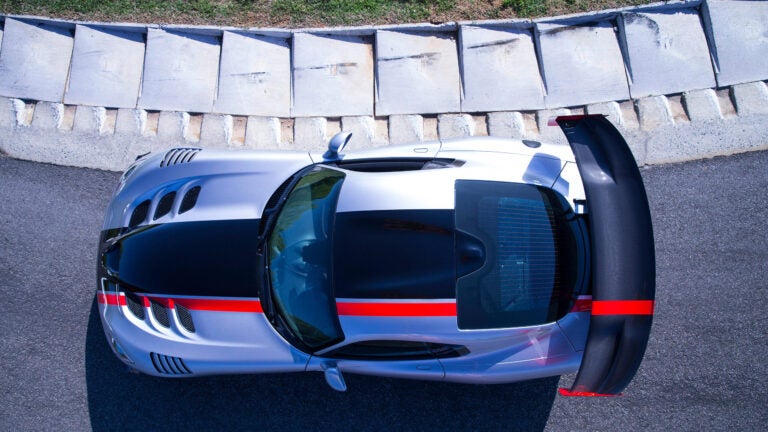
Dodge Viper (1992-2010, 2013-2017)

The Viper was somehow always an underdog, even when it was setting track records.
After being discontinued in 2010, the Dodge Viper returned for 2013 with much fanfare that would spawn plenty of special editions.
Dodge has been making headlines by cramming massive power into more practical cars like the Charger and Challenger, including the 707-horsepower Hellcat and 840-horsepower Demon. It’s just easier to shove ever-larger engines into a common platform than it is to support a specialized supercar. That doesn’t mean it hurts any less to see it go.
Hyundai Azera (2006-2017)

If you forgot the Azera was still a thing, we don’t blame you.
You’d be forgiven for forgetting the Azera was still being sold in dealerships. The comfy-land-barge segment represented by the Azera and Toyota Avalon is a dying breed. While Toyota unveiled a redesigned Avalon earlier this year at the Detroit Auto Show, there are only so many octogenarians to go around, and Hyundai opted just to rip off the band-aid.
Hyundai has also been investing in its new Genesis luxury brand, and the arrival of the upscale and athletic G80 has made the Azera irrelevant.
Infiniti QX70 (2003-2017)

The QX70 set the template for cars like the BMW X6 and Mercedes-Benz GLE Coupe.
BMW can thank the QX70 (original called FX) for the X6 M. Infiniti created a truly unique vehicle that woke up the otherwise underwhelming crossover market at the time. Thanks to a platform shared with the Nissan 370Z, it has an athletic, rear-wheel drive feel, and brisk performance for an SUV. Given most Infiniti SUVs will be FWD-based by next year, it’s too bad to see a true performance-minded SUV exit the market.
Jeep Patriot (2007-2017)

By 2017, the Patriot was getting long in the tooth.
With a new Wrangler and a variety of capable, attractive SUVs for various sizes and budgets, it’s a good time to be Jeep. But the Patriot comes from Jeep’s darker days, and actually shares a platform with the woeful Dodge Caliber. With Jeep finally filling out the compact end of its lineup with a completely redesigned Compass, the Patriot’s demise was inevitable and long overdue.
Lexus CT 200h (2011-2017)

The CT was a practical, fuel-efficient car.
At its core, the CT 200h was a Prius for someone who wouldn’t be caught dead driving a Prius. With buyers preferring small crossovers more and more, the CT will be replaced by the forthcoming UX Hybrid crossover.
Mitsubishi Lancer (2002-2017)

The Lancer never kept up with the ever-changing small car market.
It’s a shame the rally-inspired Lancer Evolution fell to the wayside as its rival, the Subaru WRX, thrived. Mitsubishi has all but given up on true performance cars in favor of hybrid crossovers. (The Lancer Evo left the market in 2015. The rest of the Lancer lineup bowed out for 2017). In fact, the Evolution name could soon find itself on a future crossover featuring a hybrid drivetrain. Not exactly the race-inspired machine enthusiasts fell in love with.
Nissan Quest (1993-2007)

The Quest is a good minivan, but the rest of the segment is better.
What started as a re-branded Mercury Villager evolved into its own unique minivan. The third-gen Quest featured bold styling for the era, but the fourth-and-final-generation Quest was too closely based on its Japanese Domestic Market stablemate, the Nissan Elgrand. With the Honda Odyssey, Toyota Sienna, and Chrysler Pacifica all painstakingly designed for the needs of American families, Nissan was bound to reach the end of its Quest.
Volkswagen CC (2009-2017)

The CC looks and drives like a more expensive car.
The CC was a groundbreaking car at the time of its inception. Only the Mercedes-Benz CLS-Class predates the CC in the four-door coupe segment. The CC was the first such car to be offered by a non-luxury brand. This type of car continues to grow in popularity, and the spirit of the CC will live on in its replacement: the upcoming VW Arteon.
Volkswagen Touareg (2004-2017)

The SUV market could use more vehicles like the VW Touareg.
Looking at the redesigned Volkswagen Tiguan and all-new Atlas, it was easy to see the Touareg’s days were numbered. VW is going for a family-hauler-style crossover SUV, as opposed to more capable, truck-like SUVs. The Touareg had more in common with a Porsche Cayenne than a crossover. This capable (if often unreliable) SUV will be sorely missed.