Why you need winter tires even if you have all-wheel drive
In winter weather, all-season tires aren't good enough.
It’s beautiful fall weather now, but winter is looming. We get ourselves ready by packing away the summer clothes and breaking out the sweaters, but is your car ready, too? You might think having a vehicle with all-wheel drive is the key to stress-free winter driving, but if you’re ignoring your tires, then you’re not as ready as you think.
There was a time when everyone swapped out summer tires for snow tires. When all-season tires were introduced in the late 1970s, the bi-annual tire change became a thing of the past. It might be convenient to leave the same tires on your car all year, but it’s not the best idea if you live where there’s winter weather.
Even if you wait for the storm to pass rather than driving in the snow, you still benefit from winter tires because it’s not just about the white stuff. It’s also about the cold, so unless you’re planning on storing your car until spring, there’s good reason to put winter tires on your car.
Part of the confusion comes from calling them snow tires. They’re technically called winter tires because it’s about the whole season, not just the snow. It all has to do with the rubber compounds used for winter tires, which are very different from those used in summer or all-season tires.
Think about that candy bar you put in the freezer. It starts out soft and gooey, but a few hours in the freezer makes it hard and brittle. The rubber compound in an all-season or summer tire is like that candy bar. When the weather gets cold, the rubber gets hard and brittle and you lose traction. Once the temperature drops to 44 degrees on a regular basis, that’s when you should be putting a set of winter tires on your car.
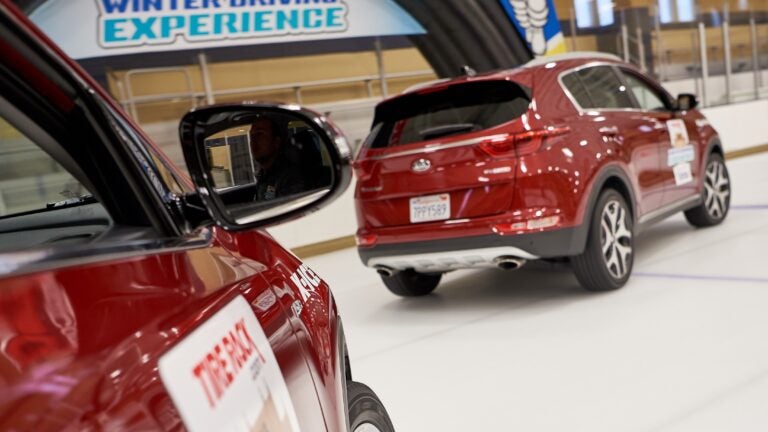
We had a chance to see just how much of a difference winter tires make by driving cars in an ice rink. The folks at Tire Rack set us up with identical vehicles, one equipped with all-season tires and one equipped with Michelin X-Ice Xi3 winter tires.
Even with all-wheel drive, the winter tires had far better traction so they stopped the vehicles more quickly and with far better control. Even driving as slow as 10 mph, the all-season tires sent us sliding while the winter tires brought us to a quick and complete stop. The rubber compounds in the winter tires made all the difference.
If you’ve never bought winter tires or it’s been a few years, then it can be a bit daunting looking at all the choices today. It’s not simply a matter of finding a winter tire that fits your vehicle and then buying one randomly. There are differences between winter tires that make each perfectly suited to specific situations.
There are varying tread patterns that have an impact not only on traction, but also on road noise. Some winter tires produce more road noise than others making them less than ideal if you’ll be doing lots of highway driving during the winter months. Heavier tread patterns can also reduce fuel economy, which is something those who do long distance winter driving need to consider.
The type of vehicle you drive also plays into which winter tires are best for you. Much like you’d buy a different tire for your sedan, your SUV, or your sports car in the summer, the same is true of your winter tires. They need to be well-suited to your vehicle to get the best performance.
Don’t go it alone. Head to your local tire shop and ask the experts. They can direct you to a tire that works for your car and your driving needs. They’ll ask the right questions to figure out which tire is best for your vehicle and they’ll be able to answer your questions so you get a set of winter tires that will make driving this winter safer and stress-free.