‘What’s the difference between four- and six-cylinder engines?’
The Car Doc weighs in.
Boston.com Cars is your go-to resource for coverage of local car news, events, and reviews. In the market for a car or truck? Check out our new car specials and used car specials curated by our local dealer network. Q. I have a 2007 Hyundai Sante Fe with all-wheel-drive, but I’m thinking about buying a new car. I like everything about my current one, but it’s approaching 191,000 miles. This Hyundai has been the best vehicle I’ve owned in 40 years of driving. Replacing this Sante-Fe with another Hyundai probably makes sense, but my current vehicle is a six-cylinder and the new Hyundai has a four-cylinder engine. I like the pick-up in my little SUV, so what do you think of dropping down to a four-cylinder engine? Will I miss the power? Will a four-cylinder engine last as long as the bigger six-cylinder?A.
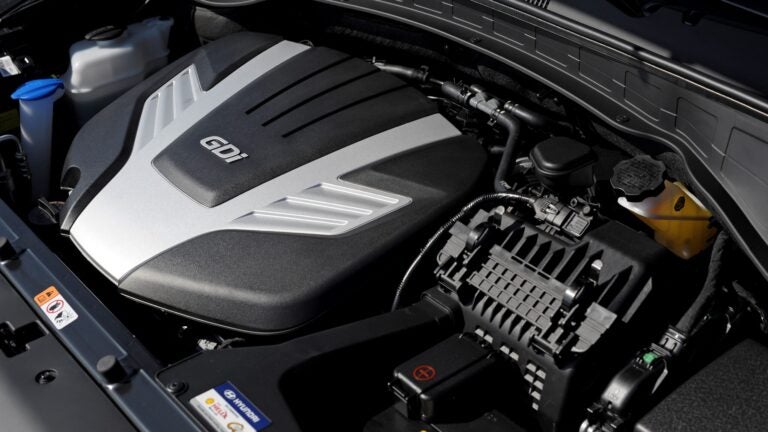
Don’t overlook today’s four-cylinder engines in any vehicle. They are smooth and, in some cases, more powerful than older six-cylinder engines. The 2.7-liter, six-cylinder engine in your 2007 Hyundai develops 185 horsepower. The 2.0-liter engine in the Sante Fe Sport develops the same 185 horsepower. If you want a little more performance, the turbo-charged version develops 240 horsepower. Driving the latest from Hyundai should satisfy your needs. Regarding engine longevity, it takes only about 15 horsepower to maintain highway speed. If you drive with your foot to the floor all the time, the engine won’t last, but that’s not how we drive. In most cases, drivers only use “full-throttle” 10 percent of the time, which should translate into long engine life.
John Paul is AAA Northeast’s Car Doctor. He has over 40 years experience in the automotive business and is an ASE certified master technician. He answers readers’ questions each Saturday. You can tune in to his radio program Saturday morning from 8:30-10 a.m. on 950AM WROL or wrolradio.com. Email your car question to [email protected].