An expert’s guide to off-roading in Massachusetts like a pro
From national seashores to private reserves, there are many options for 4x4 enthusiasts in the Bay State.
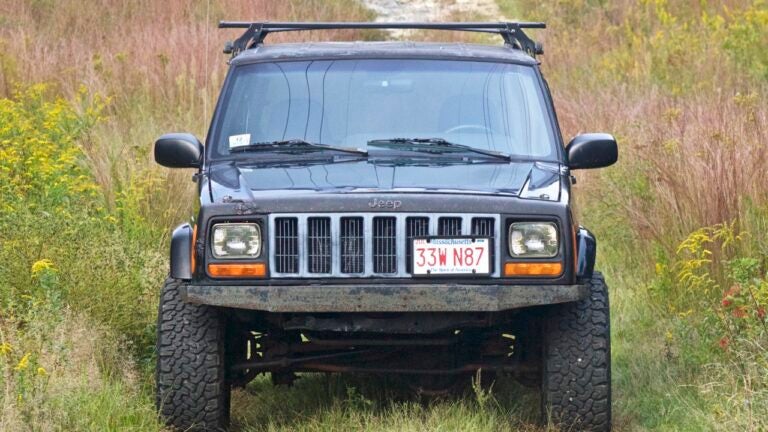
So you just purchased a Jeep Wrangler, Toyota 4Runner, or some other off-road-capable SUV or truck. Where are you going to go to push it to its limits?
Some states have state-run off-road parks, but space is limited in Massachusetts. As such, the Department of Conservation and Recreation puts an emphasis on the “conservation” part of that name, and off-road options are limited.
But if you do your research, there are local options for getting your 4×4 out into the wilderness. Here are a few:
State and Town Beaches
Plymouth, Duxbury, and other coastal towns have beaches you can drive onto, and then enjoy the waves just yards away. Many of these beaches, like Plymouth, require you to be a town resident to get a pass, but other towns, like Duxbury, offer limited out-of-town passes. Check each town’s website to learn the rules and regulations.
Cape Cod National Seashore
To do some real “oversand” driving on sanctioned land, you need to drive to Cape Cod, where the Cape Cod National Seashore boasts beaches and sandy trails that are accessible by SUV or truck.
Sand is different than dirt, rock, or mud, so you’ll need to know what you’re doing. Before getting a pass, you’ll need proper safety equipment, correct tire sizes (including a full-size spare), and to have the vehicle inspected at the Off-Road Permit Station at Race Point Beach. The station opens April 10 every year, and Coast Guard Beach passes go on sale March 1. Daily and weekly passes fill up very fast, so even if you want to tackle the dunes in July, you’ll want to get inspected by mid April.

The author’s Jeep, navigating trails.
Off-Road Clubs and Private Groups
With so few state-run options, the off-road community has to turn to one another to find safe, legal places to use trails. According to Eric Amato, an avid off-roader, desert racer, and automotive photographer, the place to start is with The Northeast Association of 4WD Clubs (NEA), which is the parent organization of many clubs from eastern Massachusetts to upstate New York.
“There are all sorts of different properties across New England,” Amato said. “These properties are owned by clubs, individuals in clubs, or people associated [with] clubs.” Clubs like New England Toyota Crawlers or NE Jeeps are part of NEA, and various properties are associated with these organizations, too.
“It’s very well organized because it has to be,” he said. “Legal liability [and other factors] make it difficult to own an off-road park. This is a very organized way of making sure properties don’t get overused.”
There are different clubs for different skillsets. If you own a heavily modified Jeep and you’re on the trail every weekend, then you probably already have a club. But if you’re new to the hobby, there are still ways to get involved.
“A couple times a year, there is a public weekend where you pay an entry fee,” Amato said. “Anyone can go wheeling on these weekends, but 95 percent of the time, you have to be a member of one of the clubs.”
After you find a club to join, you’ll probably have to pay an entry fee. Organized clubs like these also help to maintain an expectation of skill in your vehicle and, above all, respect for the trail.

The author’s Jeep, navigating trails.
You can head across the border, too
Many places in New Hampshire feature Class 5 town roads, which are not maintained by the town and are good for stock 4×4 vehicles with 31-inch tires. Check with each town’s website to see the open dates for these roads. ExploringNH is a good resource for off-roading in New Hampshire, according to Amato.
PSA: If you are new to this hobby, don’t go it alone. Wheeling in groups makes things fun, and keeps it safe.